Tiangong Ultra Wins WHRG 400m in 38.15 Seconds
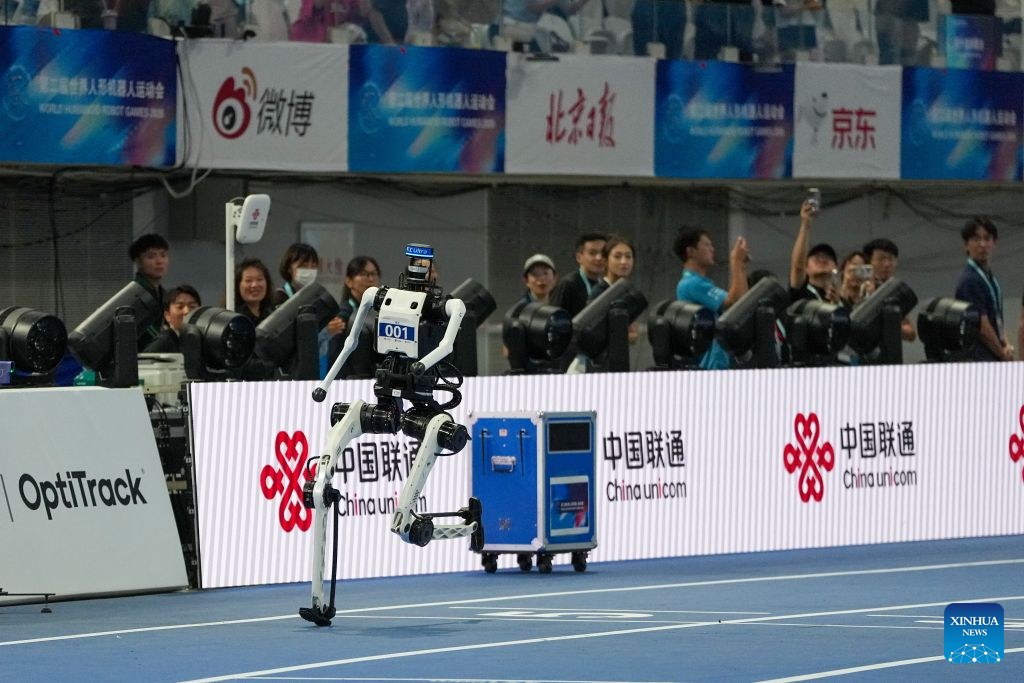
On Sunday at the World Humanoid Robot Games, Tiangong Ultra ran the Large Group 400 meters in 38.15 seconds. Global Times, posting from the Ice Ribbon that afternoon, called it the meet’s first gold. Wayde van Niekerk’s human world record is 43.03 seconds.
That is a different race from Saturday’s 100-meter heat. The 100-meter story is already on this site. Sunday was the one-lap final.
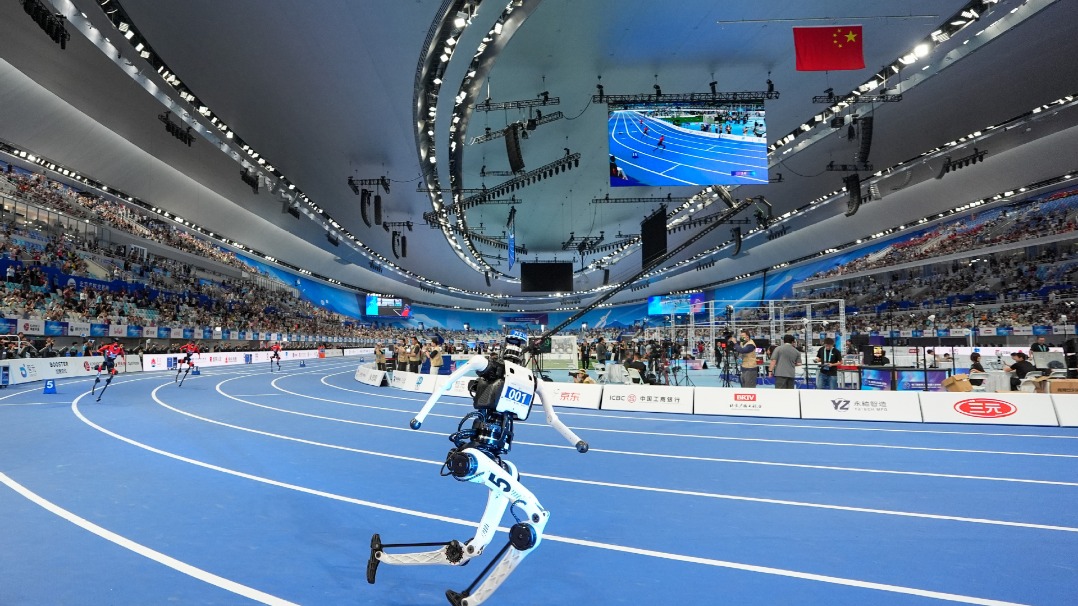
The Large Group final, lane by lane
Global Times lists four finalists. Lanes 1–3 ran Honor’s Lightning. Lane 4 ran Ultra.
- 1st: Tien Kung / Tiangong Ultra — 38.15 s
- 2nd: Zhuifeng Zaizai (Lightning) — 39.45 s
- 3rd: Jinghong Power (Lightning) — 39.66 s
- 4th: Honor Shuangchi (Lightning) — 40.08 s
Xinhua’s English service, carried by People’s Daily on Monday, captions the same race as robot “Tiangong” at 38.15 seconds. China Daily also uses “Tiangong” for the Large Group win. Global Times is the outlet that names the platform Ultra and prints the full result sheet.
The Telegraph had 38.16 seconds on Sunday evening, then noted a later revision to 38.15. Channels Television has the same revision note. I am using Global Times and Xinhua’s 38.15.
Last year’s winning 400-meter time, Global Times says, was 1:28.03. That is the comparison that matters. Human records are a headline. Year-over-year is the engineering.
Omni’s small-group 400, and the high arms
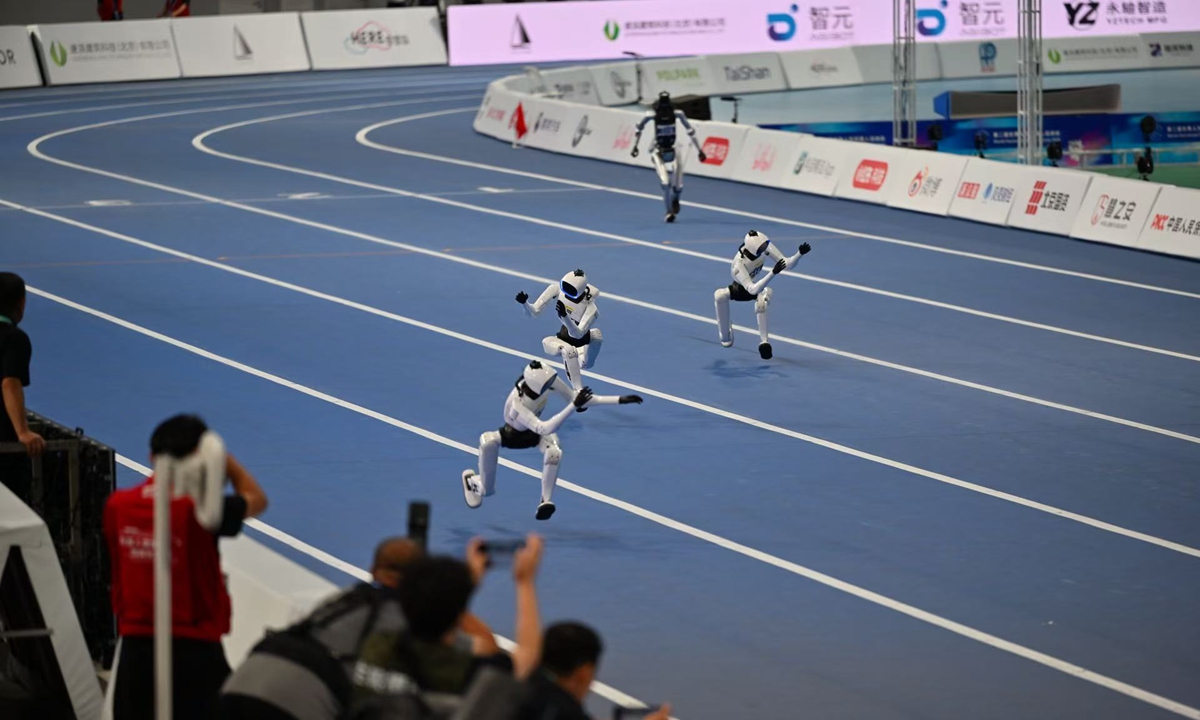
The same afternoon, Tiangong Omni won the small-group 400 meters in 45.66 seconds, Global Times reported Monday. That is the clip people are sharing: torso pitched forward, both arms up by the face, hips doing the work.
Han Gang, a motion-control engineer at X-Humanoid, told Global Times the team had started with a human-style arm swing. In simulation the policy found a cheaper pose.
“We initially designed Tien Kung Omni’s gait around a human-style arm swing,” Han said. After rewards and iteration, “It feels that this is more comfortable.”
His explanation: pumping the arms hard loads the shoulders, they heat up, energy goes up, and the robot cannot hold a full 400 meters. Hands-near-face keeps the legs working and the arms quiet. Hip heat, he said, is the endurance-race problem, not this one.
China Daily quotes van Niekerk congratulating “Honor Robotic D1” in a video on Chinese social media. The Large Group winner, in the race reporting I fetched, is Ultra, not Honor. I am leaving his wording as he said it.
China Daily also puts the field at 2,056 robots, 666 teams, 16 countries, 51 events, through Wednesday.
A Human’s Take
Saturday was the 9.39-second headline. Sunday is the more useful race. Four hundred meters is long enough for joints to cook. Ultra still ran through it, and Omni independently learned not to swing its arms like a person because the shoulders would lose.
I would not frame 38.15 versus van Niekerk as a sports story. Timing, autonomy, and how they stop are still the open questions. The Omni gait is the part I will remember: the policy found a cheat code in the thermal budget, and it looks ridiculous, and it worked.