Tiangong Ultra Runs 100m in 8.64 Seconds in the Games Final
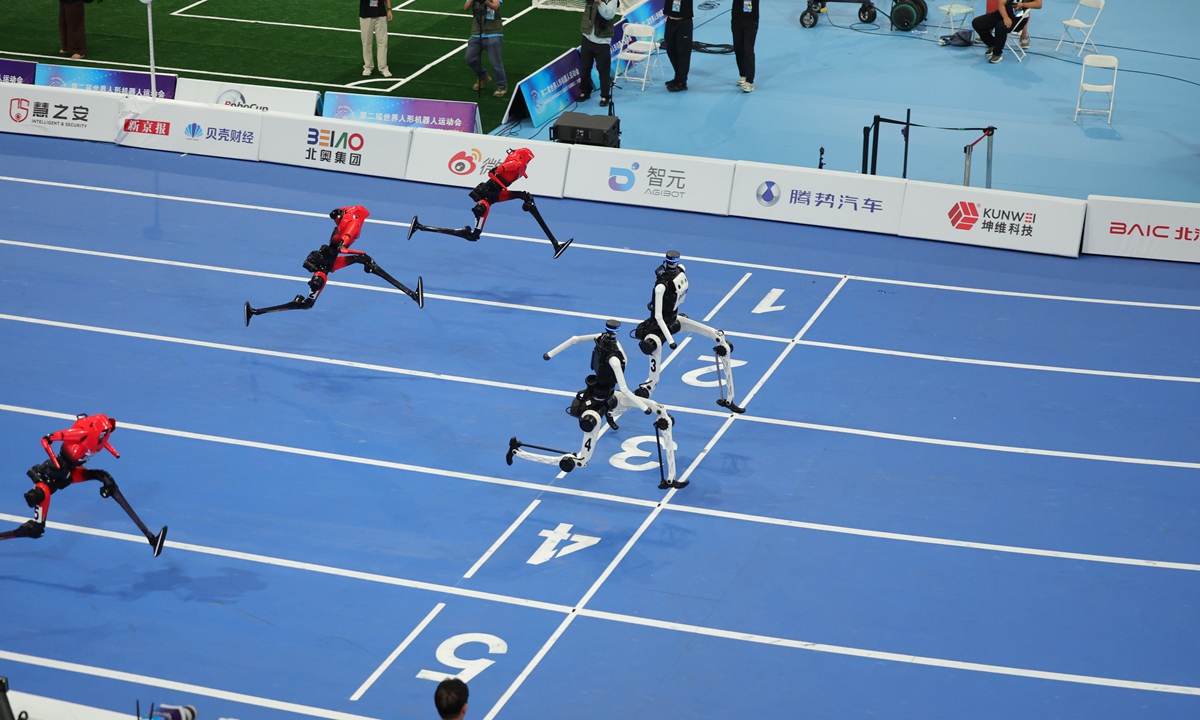
Tiangong Ultra won the large-size 100-meter final at the second World Humanoid Robot Games in 8.64 seconds. CGTN and Reuters both put that mark on the last day of the five-day meet in Beijing. That is faster than the 9.39-second heat we already covered, and faster than the 8.86-second repechage Global Times logged Tuesday night.
The robot is built by the Beijing Humanoid Robot Innovation Centre, also called X-Humanoid. Reuters notes the time sits almost a second under Usain Bolt’s 9.58-second human record from 2009. Robot and human races are not the same event. Start gear, track rules, and how much autonomy sits in the loop are still not fully spelled out.
How the clock moved
CGTN’s closing recap traces the same platform through the week: 9.39 early, 8.86, then 8.64 in the final. Global Times says 8.86 was the repechage and the previous fastest mark of these Games. Interesting Engineering, citing the same Global Times piece, puts Honor’s Lightning as the closest rival in that final.
Last year’s inaugural large-size 100m winner ran slower than 12 seconds, Global Times writes. CGTN’s year-over-year table for other events is just as steep: large-size 400m from 1:28.03 to 38.15, 1,500m from 6:34.40 to 2:21.64, standing high jump from 0.95641 m to 3.40 m.
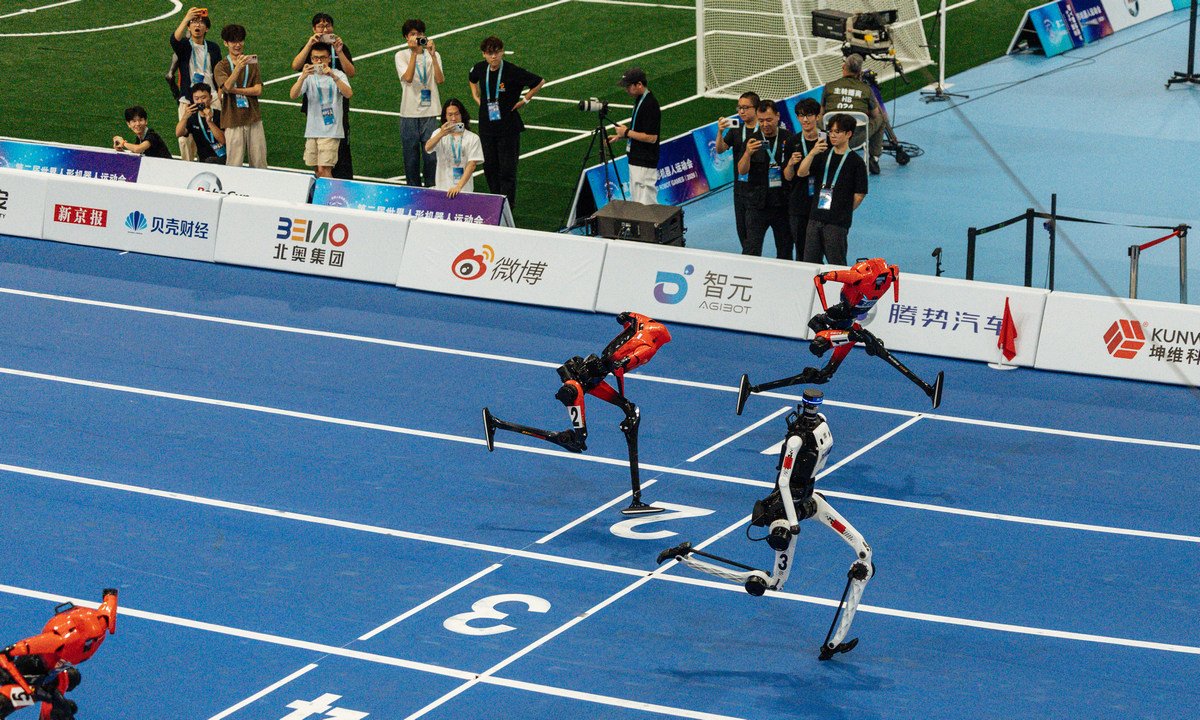
The 100m final closed the meet. CGTN counts 2,056 robots, 666 teams, 51 events, and 1,301 contests at the National Speed Skating Oval.
What else closed with it
CGTN says organizers released a dataset of more than 2,500 hours of real-world operational data from training and competition, covering 12 application scenarios, more than 100 skills, and over 10,000 detailed tasks, free to companies and labs. ANTARA’s closer from the same night says CCID and industry partners described 44 job types and about 10,000 skills in that dump. Treat the two inventories as the same release with different breakdowns.
The third Games are booked for Beijing in August 2027, CGTN reports, with scenario events expected to take a larger share.
Reuters quotes spectator Niu, 34: “Last year’s robots looked a little stiff and uncoordinated. This year, they are much better.” Galbot founder and CTO He Wang told Reuters the meet would help teams improve while showing what embodied AI can do on its own.
A Human’s Take
Eight-point-six-four is a locomotion number on a smooth oval, not a factory number. I already cared more about the crash mat after 9.39 than about beating Bolt. The useful new fact is the week-long cut: 9.39 to 8.86 to 8.64 on the same platform. That is iteration under race conditions. The 2,500-hour dump is the part I will actually watch. If those hours include the ugly stops, they are worth more than another tenth off the clock.
Sources
- CGTN — Tiangong Ultra sets 100m record as World Humanoid Robot Games close
- Global Times — Tiangong Ultra resets 100m mark at 8.64s
- Reuters via CNBC-TV18 — Robot Olympics ends with 8.64-second 100m
- Interesting Engineering — Tiangong Ultra 8.64s
- ANTARA — Games close, organizers claim records
- Global Times — 8.86-second semifinal