Tianjiao’s Humanoid Clears 7.97 Meters, Then Wins the Obstacle 400
Long jump is new at the World Humanoid Robot Games, and the Tianjiao team took gold on August 23 with a 7.97-meter leap. CGTN and CCTV both put that mark on the board. Silver went to Tianzhuo at 7.24 m, bronze to Tiangong at 7.19 m.
The next day the same Beijing Humanoid Robot Innovation Center squad won the 400-meter obstacle in 4:11.44, Global Times reported. Shanghai AgiBot was second, Tiangong third.
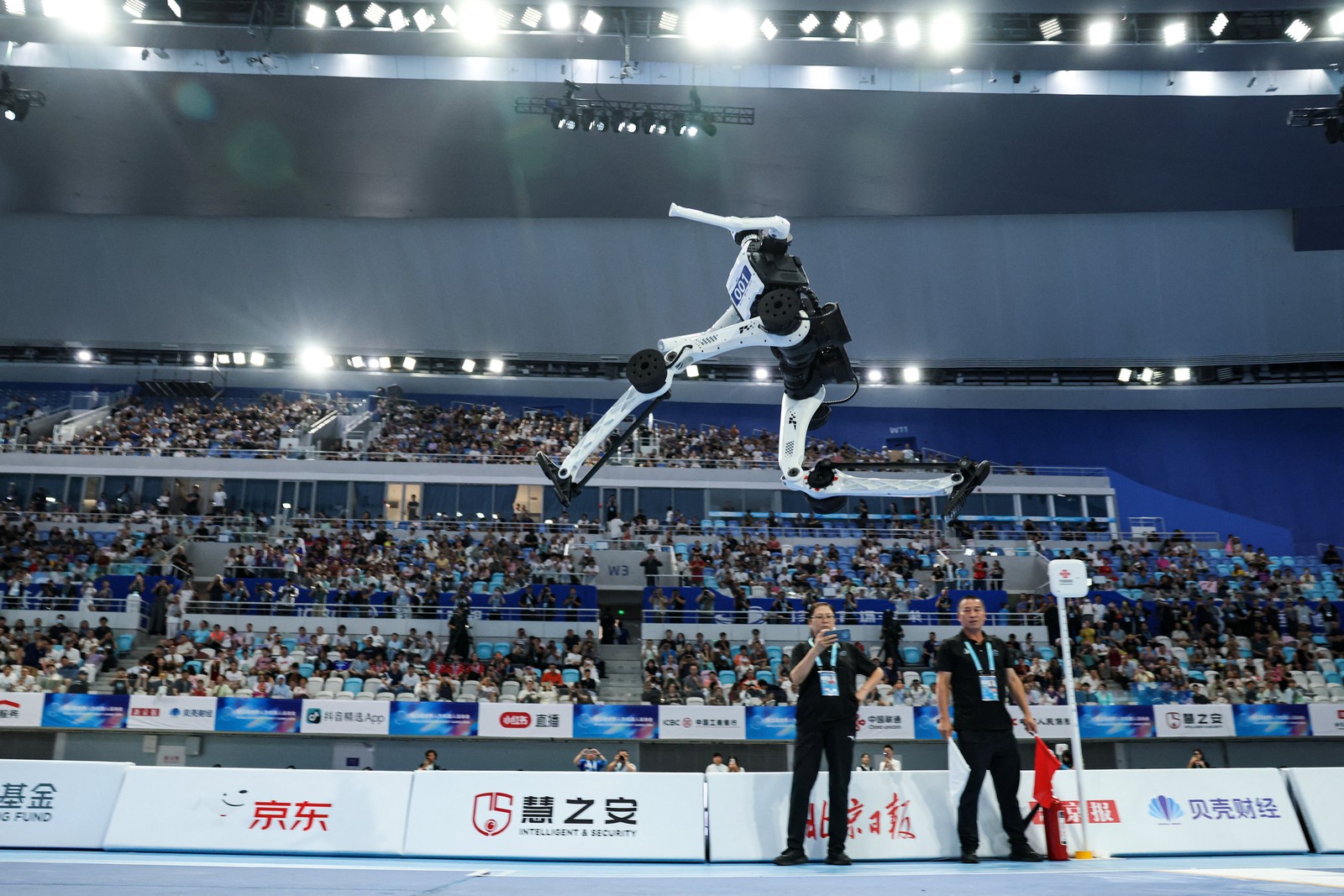
A new event, a skinny robot in the air
The Atlantic’s photo essay from the Ice Ribbon shows a Tiangong-line biped tucked in mid-air over the pit, crowd behind the boards. CGTN described the long-jump field as slender machines built for agility, with Tianjiao improving across attempts. The men’s human world record is 8.95 meters. These robots are not in that federation; they are still close enough that people in the stands started doing the subtraction.
Obstacles are a different problem
Guo Yijie, who leads humanoid R&D on TianGong Ultra and Omni at the Innovation Center, told Global Times the hard part of the obstacle race is full-body control from what the robot sees. The team trains on human motion data so the machine can change posture and recover. Falling is expected. Getting up quickly is part of the training, he said.
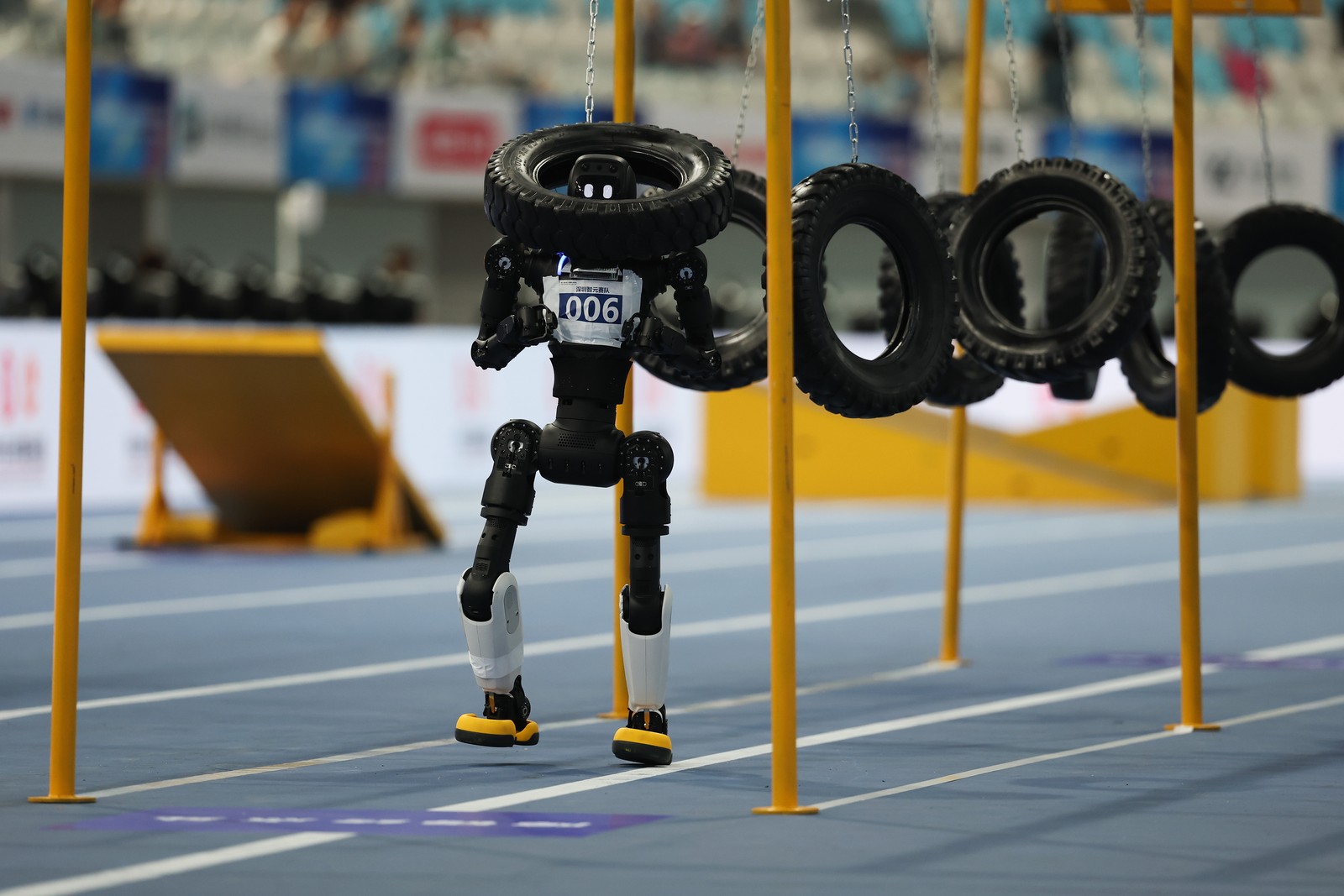
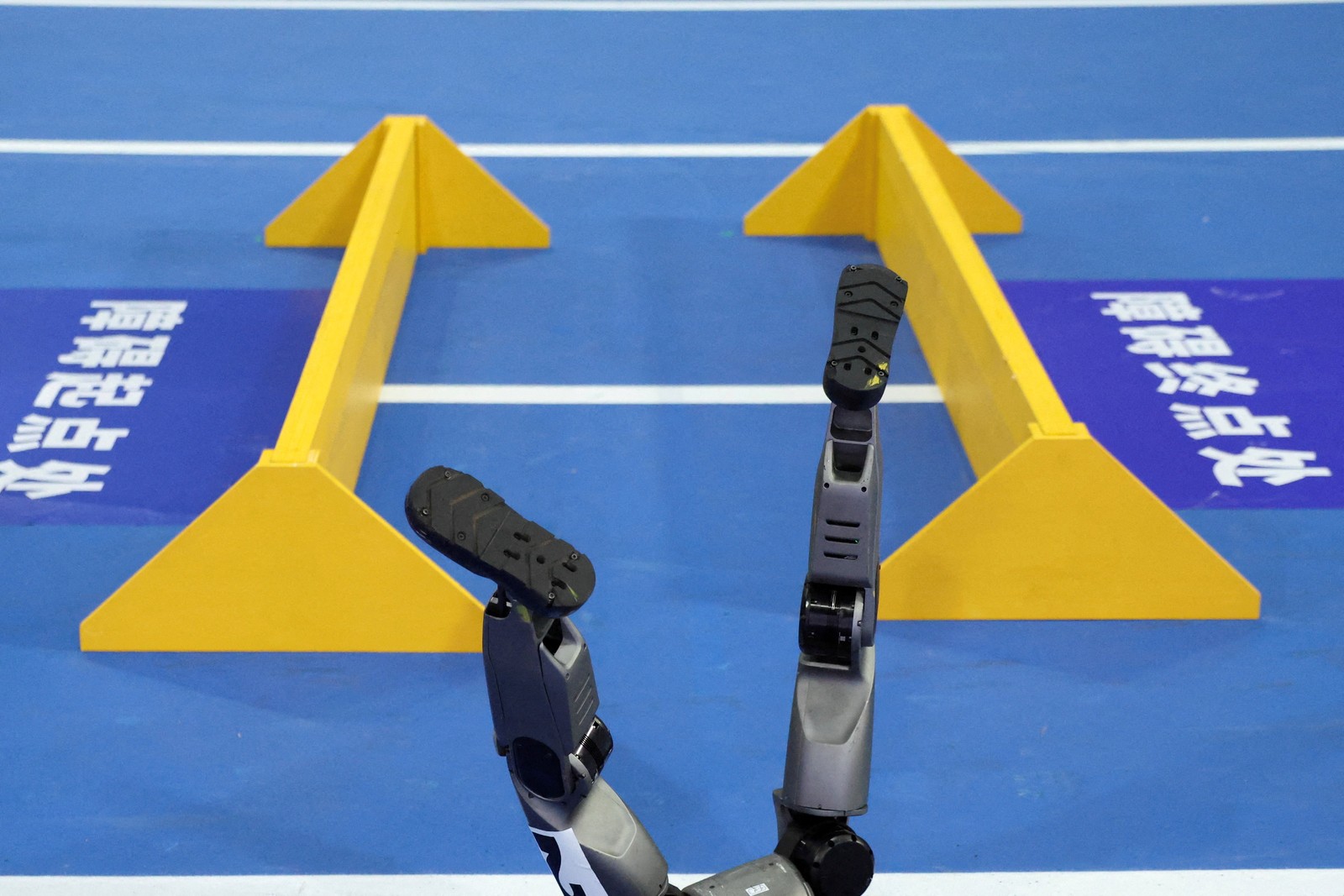
Atlantic stills from August 24 show what that looks like: a black biped, bib 006, walking into hanging tires; another machine on its back with both feet in the air in front of yellow barriers.
Liu Shaoshan, at the Shenzhen Institute of Artificial Intelligence and Robotics for Society, told Global Times the athletic jump from last year’s 21.50-second 100 m into the nine-second range is real. He also said a sub-10 sprint is not an eight-hour factory shift. Reliability, task success, generalization, safety, and cost still decide whether any of this leaves the oval.
A Human’s Take
Jumping 7.97 meters is a torque and timing problem. Threading tires without a joystick is a perception problem. I care more about the second one. Guo’s line about falling being normal is the honest part of this meet. If Tianjiao can eat a hit, stand up, and finish 4:11, that is closer to a warehouse aisle than another padded-wall sprint.