TONAV Walks a Go2-W to the Drawer, Then Closes It With Velocity
Most mobile-manip papers stop the base “near” the furniture and hope the arm can reach. TONAV, from Hunan University, treats that last meter as the job. A Unitree Go2-W with two Piper arms has to park in a pose that can actually close a drawer, flick a lamp, or lower a toilet lid, then keep contact without jitter.
Posted to arXiv August 23, with a project page of bedroom experiments. Navigation success across those three tasks is 60% overall (4/5, 3/5, 2/5). StreamVLN is 13.33%, InternNav 26.67%. Once the base is in the manipulation-ready region, TONAV’s arm policy with position-velocity teleop data hits 80% on all three tasks (4/5 each).
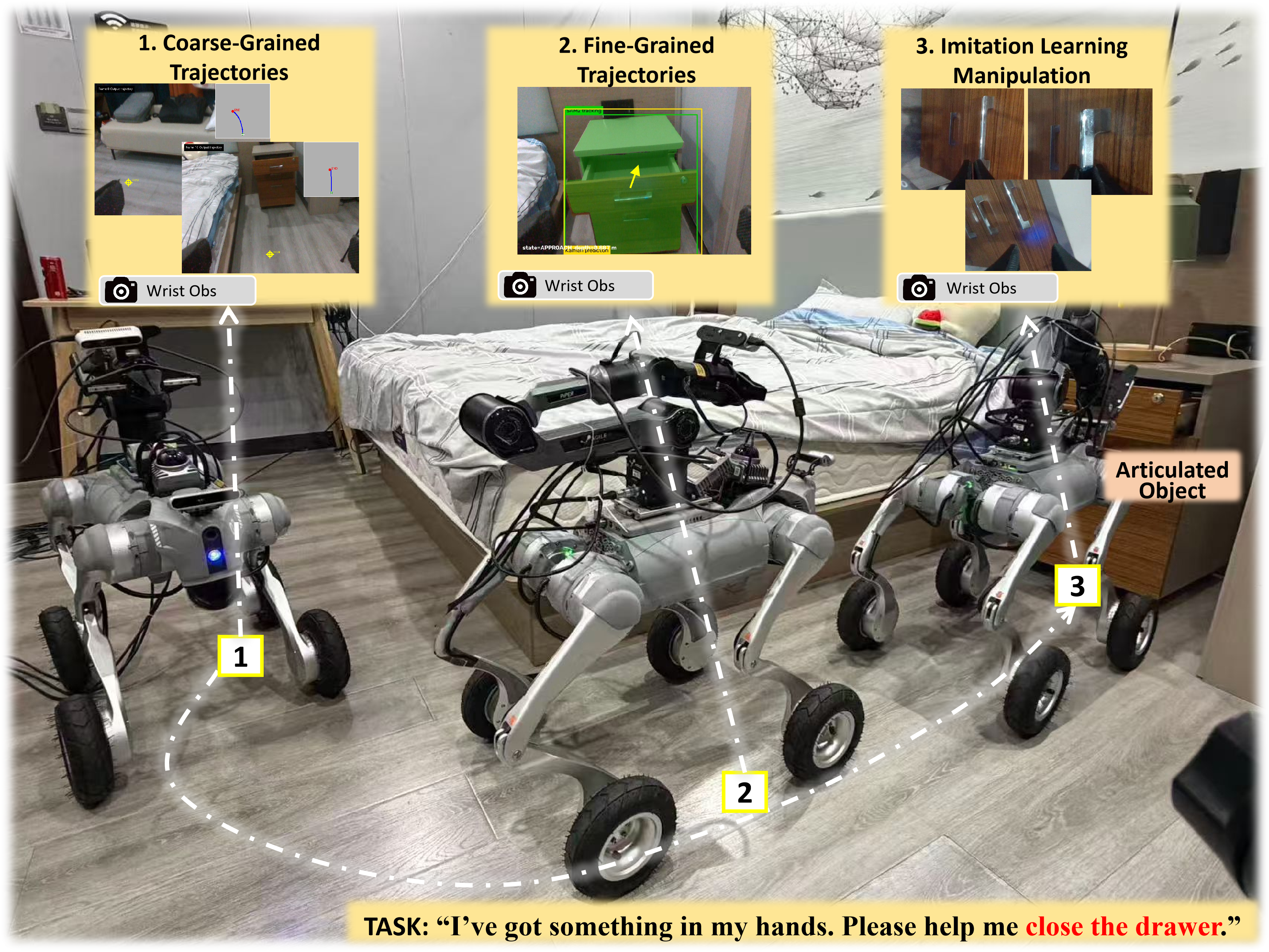
Stop where the arm can work
Perception-Planning Chain-of-Thought asks Qwen-3.7-Max to name the target and landmarks, then write turn-by-turn subgoals. An Adaptive Approach Module tracks the object with SAM2, a Kalman filter, and a stand-off distance picked for the arm workspace, not “as close as possible.”
Ablation: drop PP-CoT and overall nav falls to 26.67% with the same Qwen model. Doubao-Seed-2.1-Pro with PP-CoT is 46.67%.
Velocity in the chunk
Teleop runs 220 Hz impedance tracking with joint velocity in the command, cameras at 30 Hz. The policy is ACT-style CVAE with a second head for velocity and a consistency loss so predicted Δq matches predicted q̇. Position-only ACT and Diffusion Policy sit at 13.33% overall on the same start poses. TONAV without P–V data is 53.33%; with it, 80%.
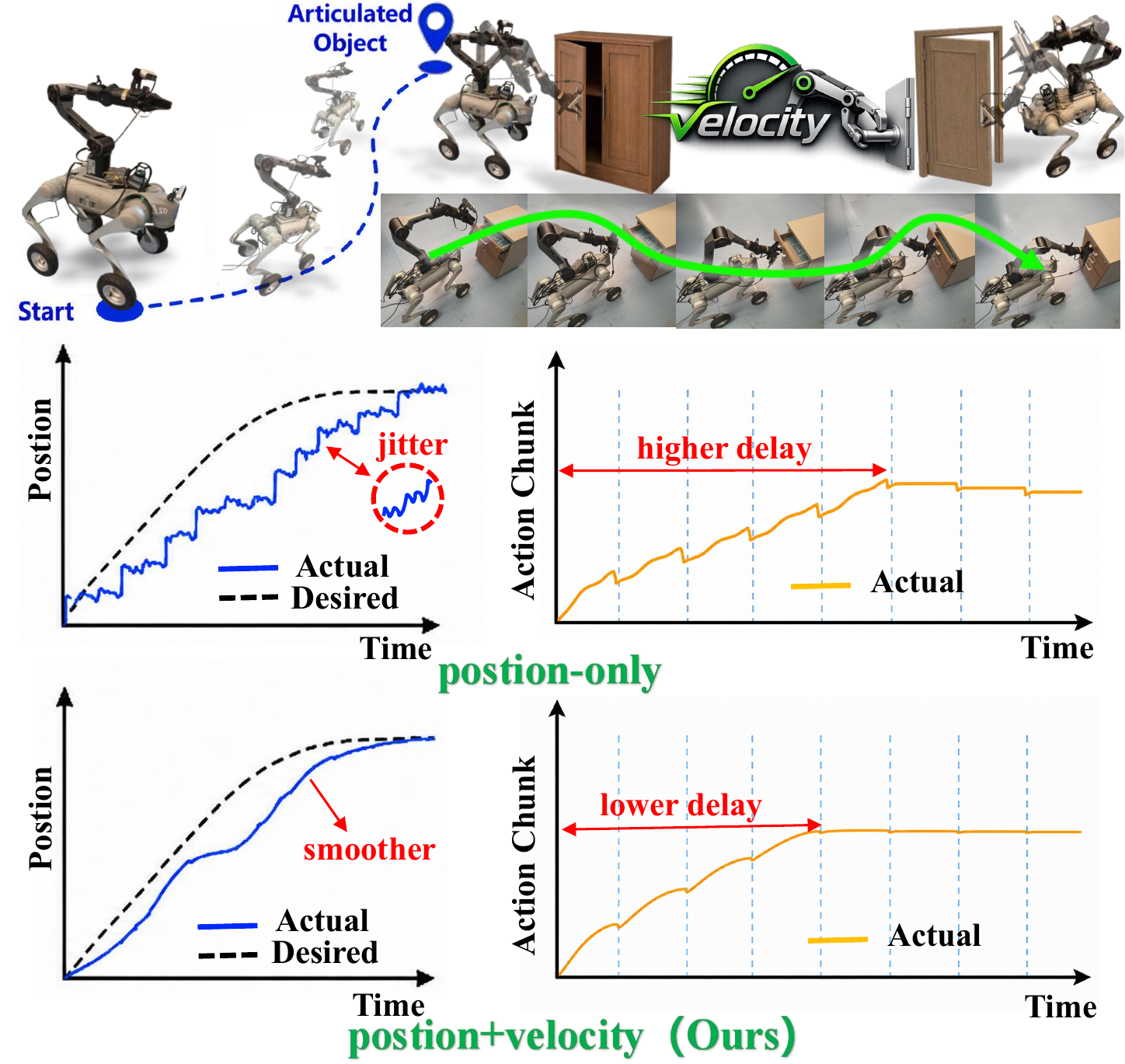
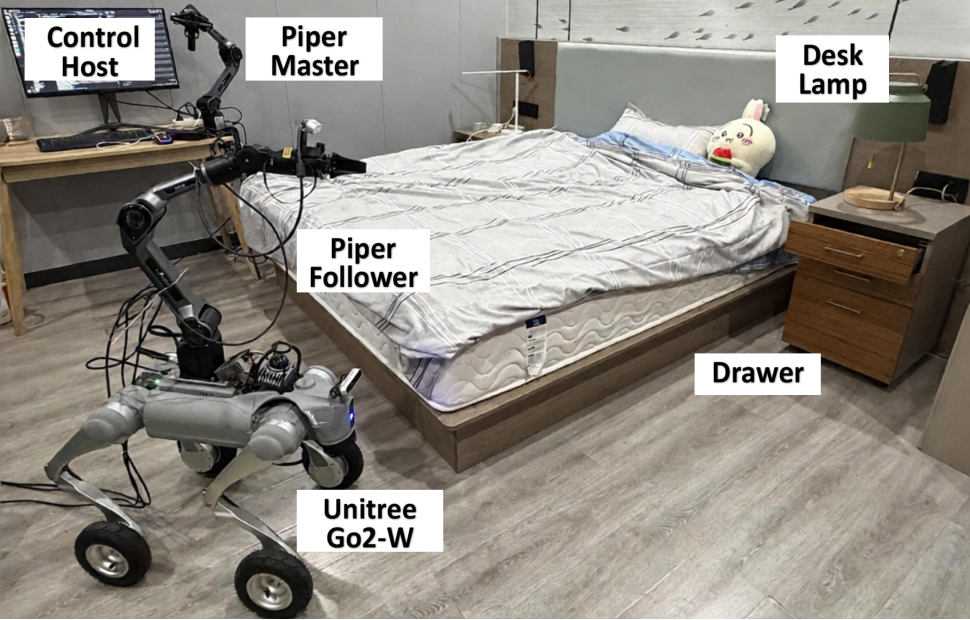
Five trials per cell is small. The paper is honest about that. The qualitative claim is less oscillation on Piper joints 1–3 while the drawer runs.
A Human’s Take
“Near the drawer” is how a lot of demos fail in kitchens. Parking on purpose, then teaching the arm how fast to push, is the right split. I want a larger trial count and a house that is not this one bedroom. The 80% with velocity in the chunk is still the number I will watch people try to copy.