Touchscreen Teleop Beats Joysticks on Nuclear-Style Surface Tasks
Swabbing a surface with a remote arm is a bad place for a floppy joystick. Path accuracy, force contact, and operator attention all fight you at once.
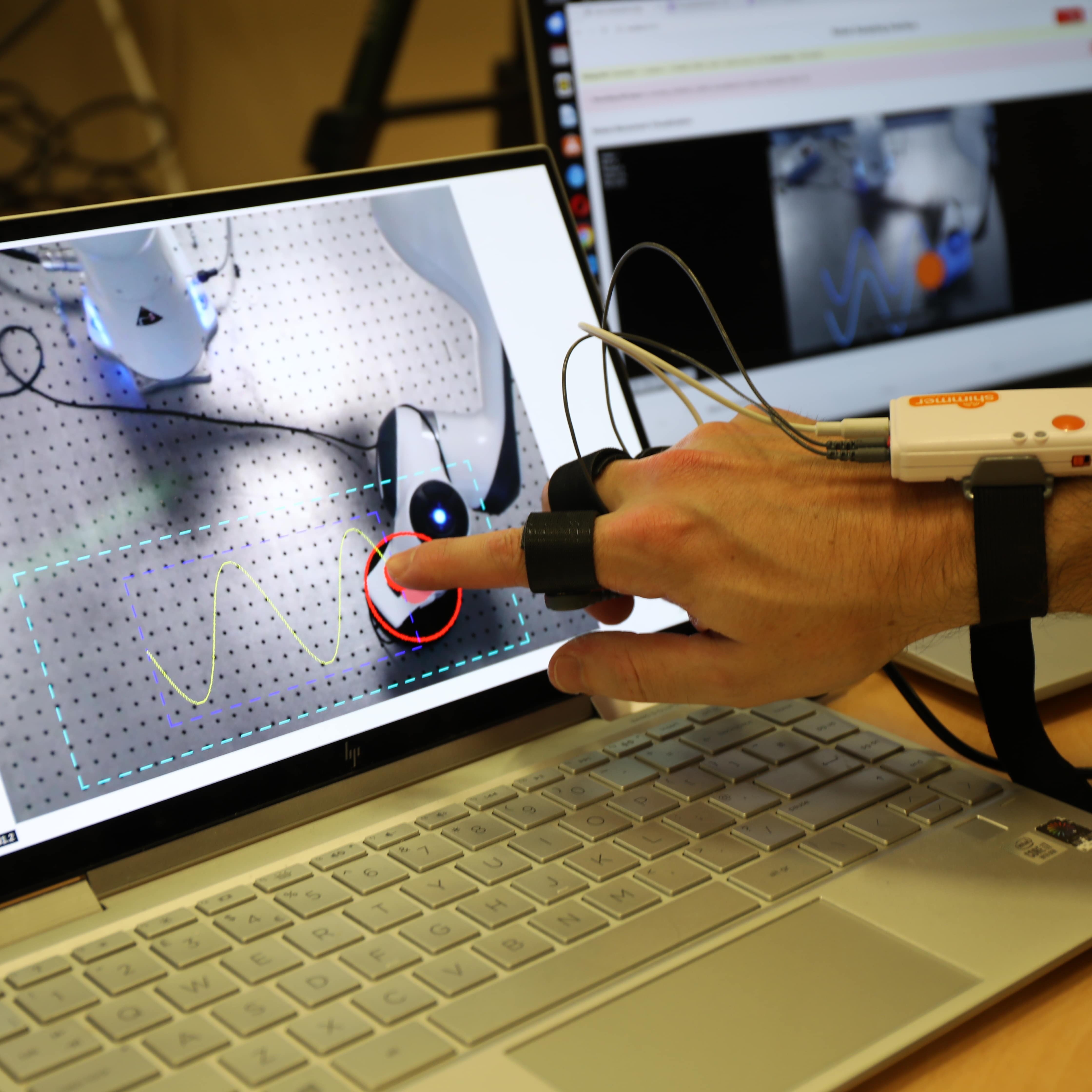
A multi-lab team (García Cárdenas, Kenan, Raei, Bremner, Giuliani, Ajoudani, Tapus) designed a touchscreen teleoperation interface that maps continuous finger motion to manipulator velocity with control and visualization on one display. The paper is arXiv:2608.06219 (Aug 6, 2026), accepted at RO-MAN 2026 in Kitakyushu.
Experiment design
- 20 participants
- Conditions: proposed touchscreen, conventional joystick, and one-click autonomous mode
- Tasks: realistic surface manipulation on a Franka Emika Panda, remotely controlled from another country
- Logged kinematics, physiological, and behavioral measures for performance, cognitive load, and trust
Results (paper-reported)
Against the joystick:
- 53.5% faster completion (median 2.50 vs 5.38 minutes)
- Higher in-area coverage on a sinusoidal path: 90.7% vs 84.1%
- Lower overshoot on both path geometries
Cognitive load (NASA-TLX, 0–100):
| Mode | Mean TLX |
|---|---|
| Joystick | 52 |
| Touchscreen | 43 (−9 points, −17.3%) |
| Autonomous one-click | 31 (−21 vs joystick) |
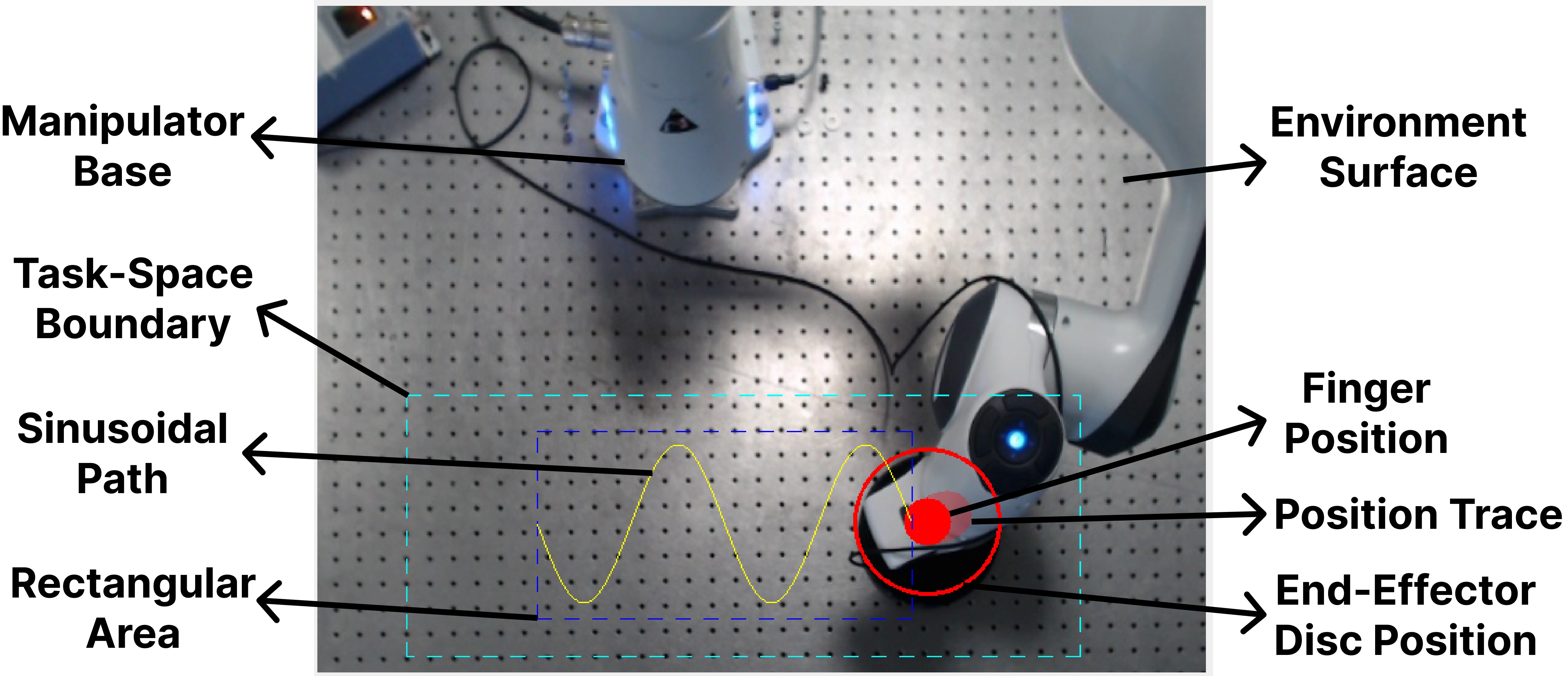
The authors pitch the interface as easy to implement for surface-contact work where joysticks underperform — nuclear swab sampling is the motivating case in the abstract.
A Human’s Take
A tablet that is both the view and the stick is the kind of boring UX win remote arms need. Autonomy still wins on TLX, as it should — the interesting number is how much pure teleop improved without adding a second operator. Next receipt: same UI on a dirty cell, not a dotted table.