Tutor’s Next Cassie Rolls, Next Sonny Picks the Aisle
Tutor Intelligence posted a 16 September product note for the next generation of Cassie and Sonny. Cassie is the company’s single-arm bulk handler. Sonny is the dual-arm picker it trained in Data Factory 1. Both now ship as mobile workers for brownfield warehouses, not as a lab fleet waiting on a cell.
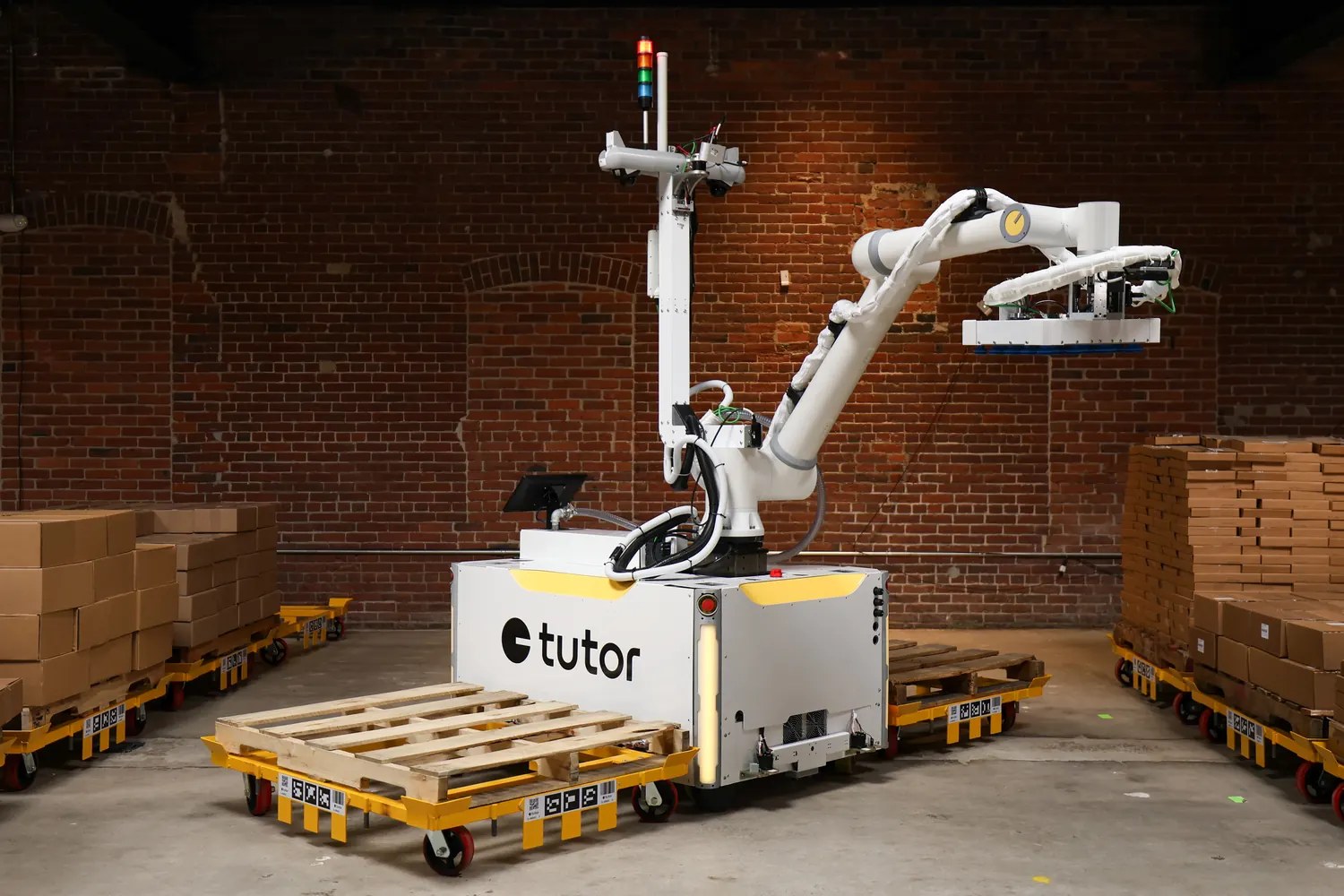
SiliconANGLE’s same-day write-up is blunt about the shape: Cassie is “a giant arm atop a large box with wheels.” Sonny is the one that looks closer to a person because the work is closer to a person’s — bins, SKUs, and shelves.
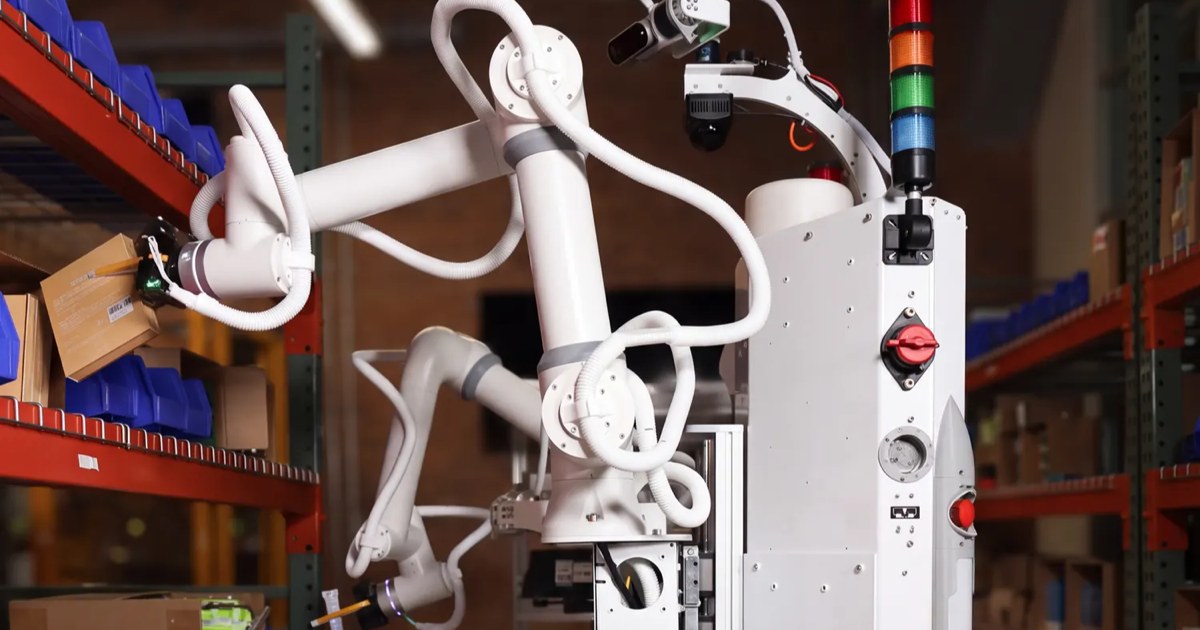
Cassie gets a floor
The first Cassie stayed put. The new one drives. Tutor says it is fully autonomously mobile on four wheels, with enough battery to finish more than a shift without a charge. Stationary jobs such as induction and palletizing now skip a physical install: vacuum generation is onboard. Mobility is the point of the fall work. The company says Cassie is going into end-to-end case picking for the first time, billed as B2B fulfillment with $0 CapEx and no major facility retrofit.
Tutor still quotes a ~40-day median from signed paperwork to robots in production. The brain on Cassie is the Turing series, which the blog puts at 200 million parameters. Extra sensing is two 3D LiDAR units on top of ISO-certified collaborative hardware and 2D LiDAR.
SiliconANGLE, from an interview with co-founder and CEO Josh Gruenstein, adds payload color: Cassie can lift 50 pounds and tug thousands of pounds.
Sonny’s first job is each-picking
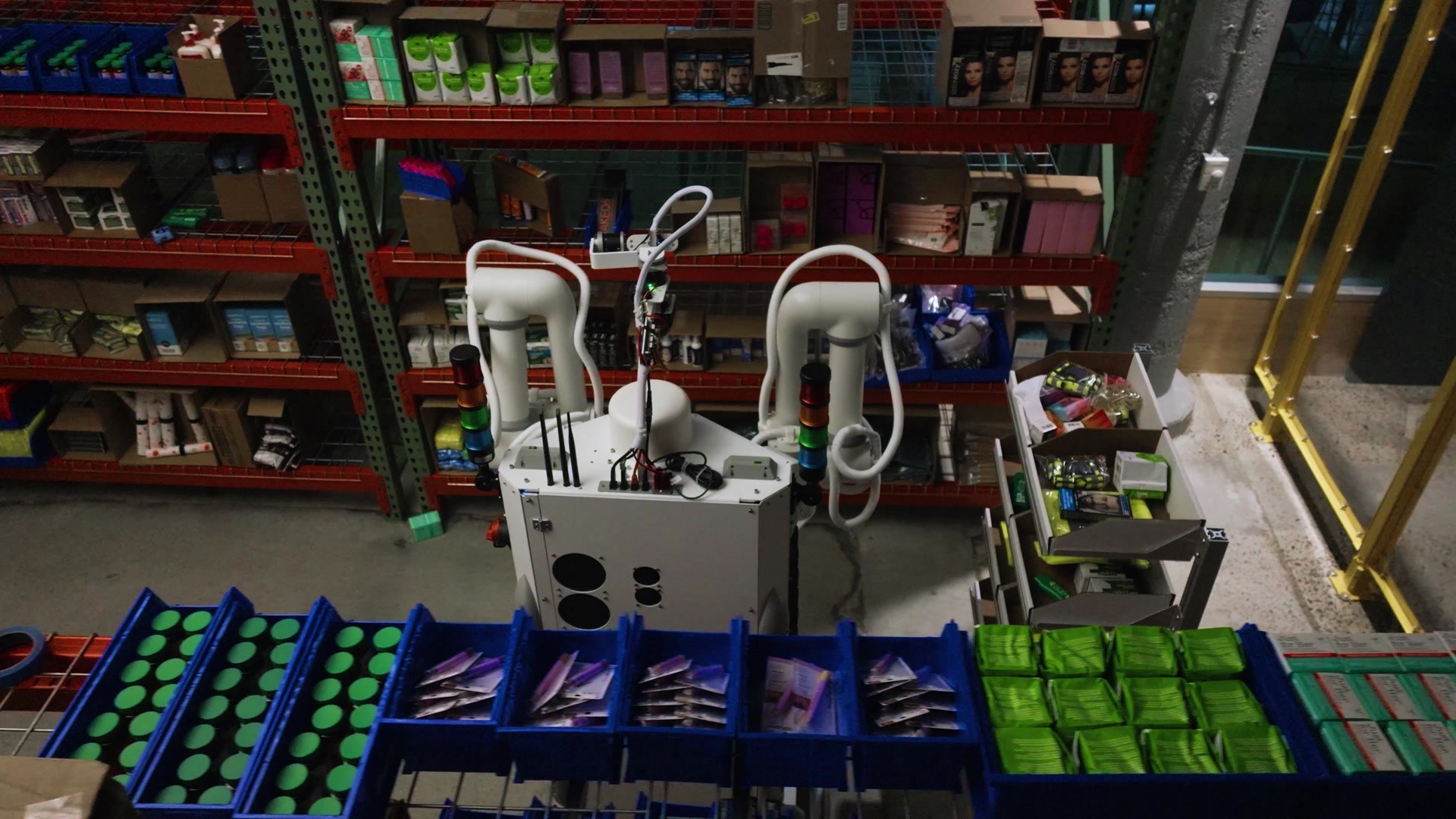
Sonny is the first Tutor robot the company says will run Ti0, a 4.5 billion-parameter vision-language-action model. Its first assignment is e-commerce fulfillment: navigate a warehouse that already exists, pick arbitrary items from racking, and take completed orders to packout.
The each-picking product page lists:
- Up to 100 picks/hour
- 12-hour battery
- 10 lb payload per arm
- Reach heights up to 7 feet
- Pay for successful picks, with Tutor operating the fleet
Gruenstein told SiliconANGLE the form is a co-design with Cassie: human-like enough for the class of work humans do, not a costume of a person. Tutor’s December $34 million Series A and the 100-robot DF1 “classroom” are the data story behind that claim. The new blog says the fleet is growing 20% month over month and that Tutor is scaling manufacturing in the United States.
A Human’s Take
I care that Cassie can leave the palletizer and drive to the next job without a facilities project. Forty days from paper to production is a number a plant manager can argue with. Sonny’s 100 picks an hour and 10-pound arms are the receipts I want on a live aisle, not a poster. If Ti0 only gets interesting after DF1’s tutors stop holding its hand, say so with a miss rate, not a parameter count.