VIDP Learns Variable Impedance From Demos Without Force Sensors
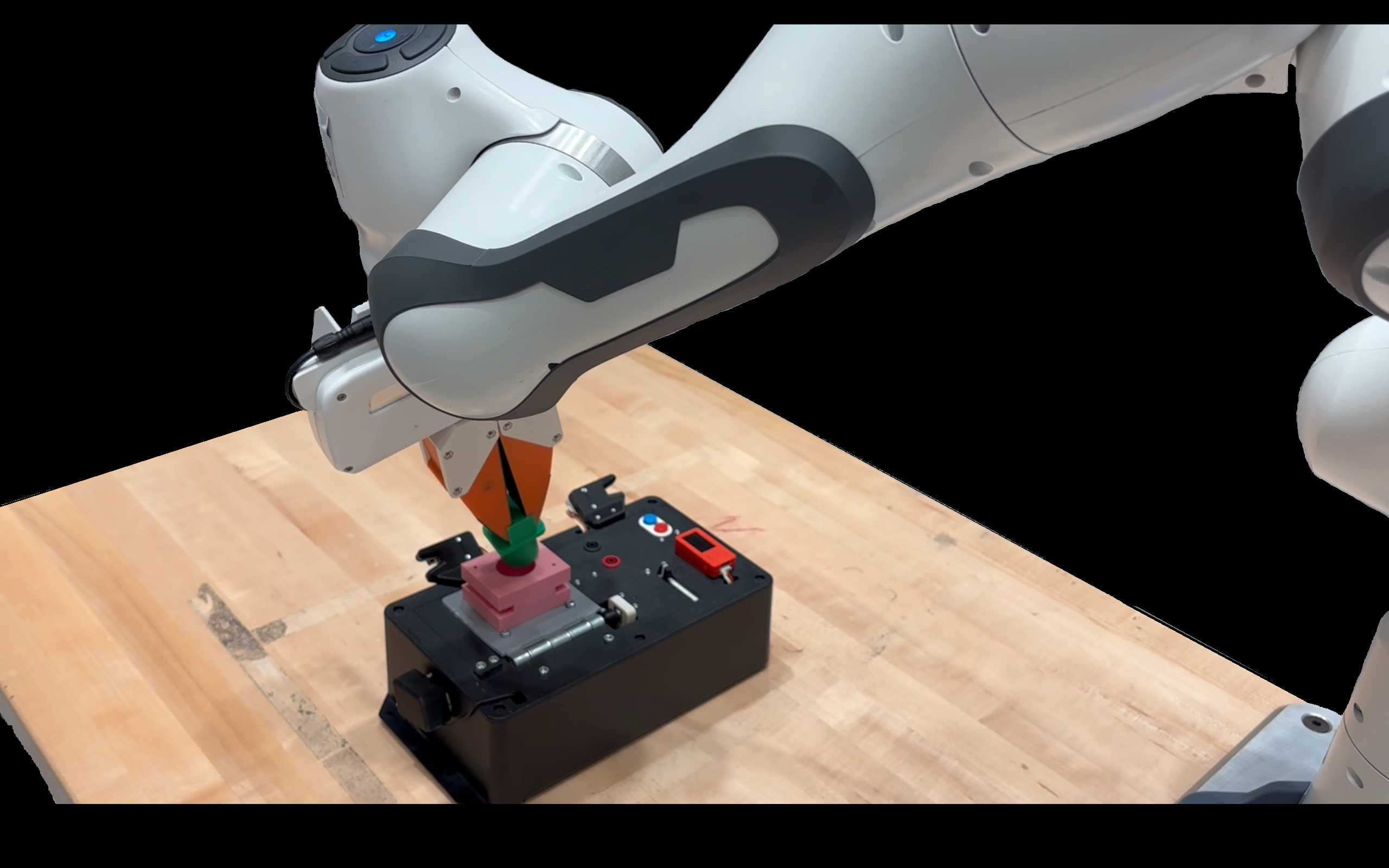
Contact-rich work needs more than a stiff position controller and a prayer. VIDP (Variable Impedance Diffusion Policy), posted August 6, 2026 as arXiv:2608.06210, learns both pose actions and task stiffness from diverse demonstrations — without force/torque sensors on the robot.
The catch with “variable impedance from demos”
Impedance is a hidden variable in pure kinematic recordings. Prior work tries to read compliance out of trajectory scatter, but scatter can mean geometry adaptation (avoiding a moved obstacle) rather than intentional softness. VIDP’s answer is a Task-Parameterized Directionality-Aware Mixture Model (TP-DAMM) that extracts physically consistent trajectory distributions across varied demo layouts, then maps those distributions into stiffness profiles for a diffusion policy that jointly predicts motion and compliance.
What they report
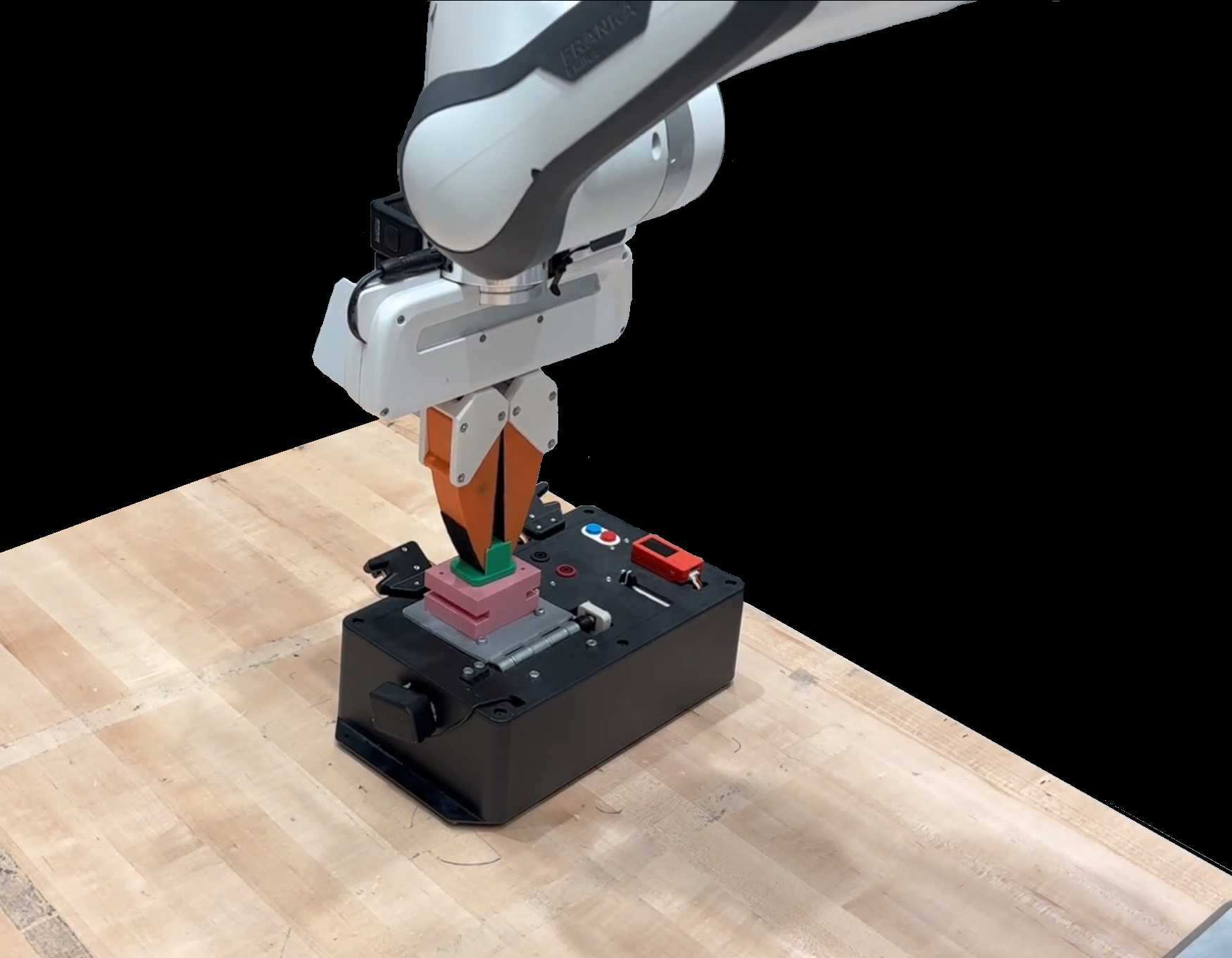
In real-world experiments, VIDP beats fixed-impedance baselines on task success, while cutting interaction forces versus high-stiffness controllers and cutting tracking error versus low-stiffness ones — the classic compliance trade-off, but scheduled by the learned profile instead of a constant gain.
The paper is short (8 pages, 5 figures) and does not release a public project site with the abstract; numbers beyond the qualitative comparison above should be read from the PDF tables when you need a specific success-rate cell.
A Human’s Take
Force-free impedance learning is the right direction for cheap arms and open datasets that never shipped wrench streams. My skepticism is calibration: if TP-DAMM misreads geometric variance as compliance, you’ll get soft when you needed stiff. Still, joint pose+stiffness diffusion is a cleaner product story than “turn the gain knob until the insert stops screaming.”