A $550 Wrist Rig That Lets You Feel a LEAP Hand Grab
Most cheap teleop kits are eyes-only. The ones that push force back at you usually cost more than $10k and weigh like a gym bag. Tohoku University’s ViHaTeleop, accepted to IROS 2026, sits in the gap: $550, 0.7 kg, and three finger rings that buzz when the robot touches something.
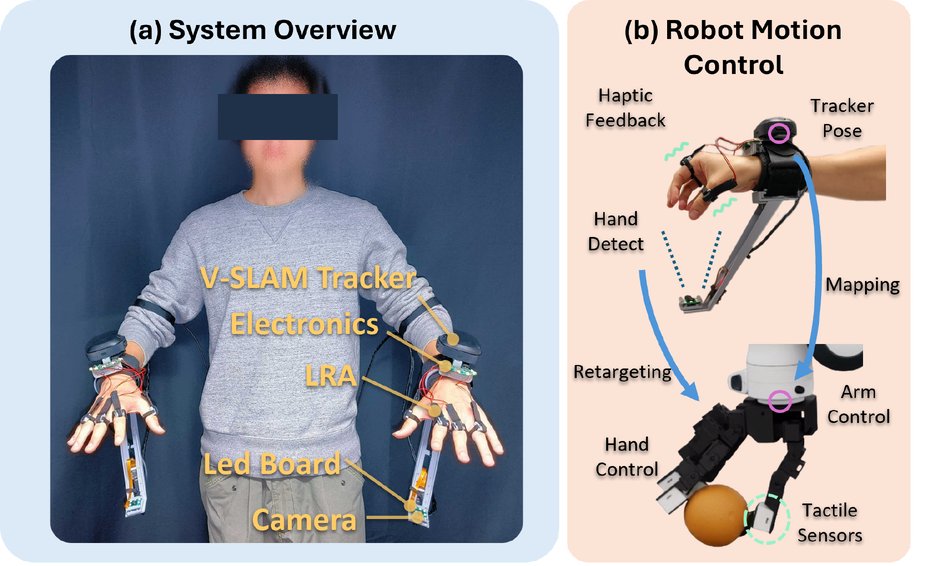
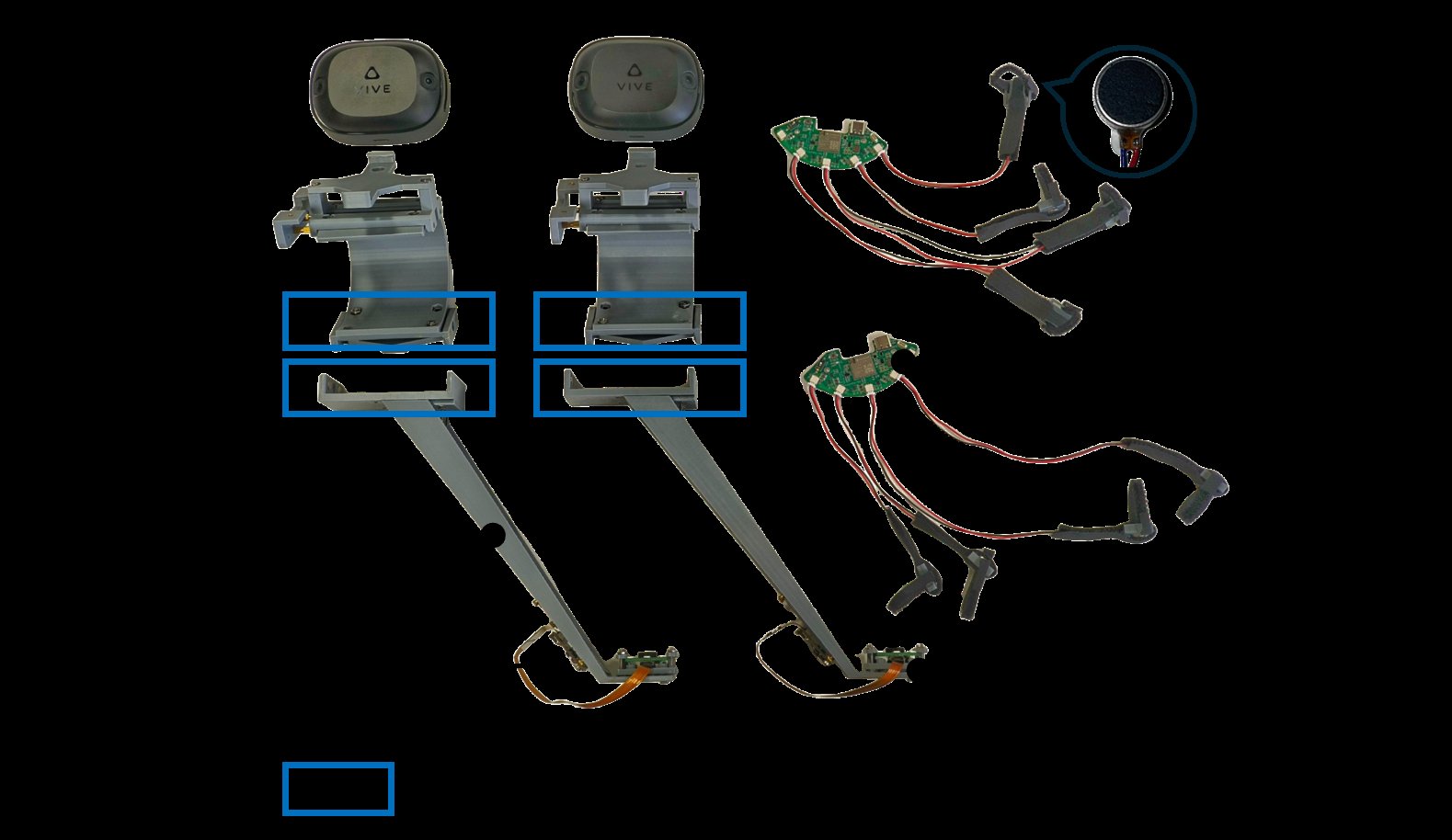
The stack is an HTC Vive Ultimate tracker for the wrist, an $11 160° fisheye for the hand, $1.4 linear resonant actuators on thumb, index, and middle, and a wrist PCB. The robot side is a Franka FR3, a LEAP Hand, and 9DTact fingertips. Control runs at 20 Hz.
What they changed besides the price
The camera rides on the wrist with a short lever arm so it does not torque your forearm. A ring of LEDs keeps MediaPipe happy. In a 160-trial lighting check, LEDs cut landmark jitter 39.6% under glare and 21.3% in low light.
Retargeting starts from DexPilot, then adds a fingertip-parallelism term so flat tactile pads actually kiss the object instead of poking it with an edge. That constraint is optional: on for pinches, off for power grasps.
Nine people, six contact-critical tasks
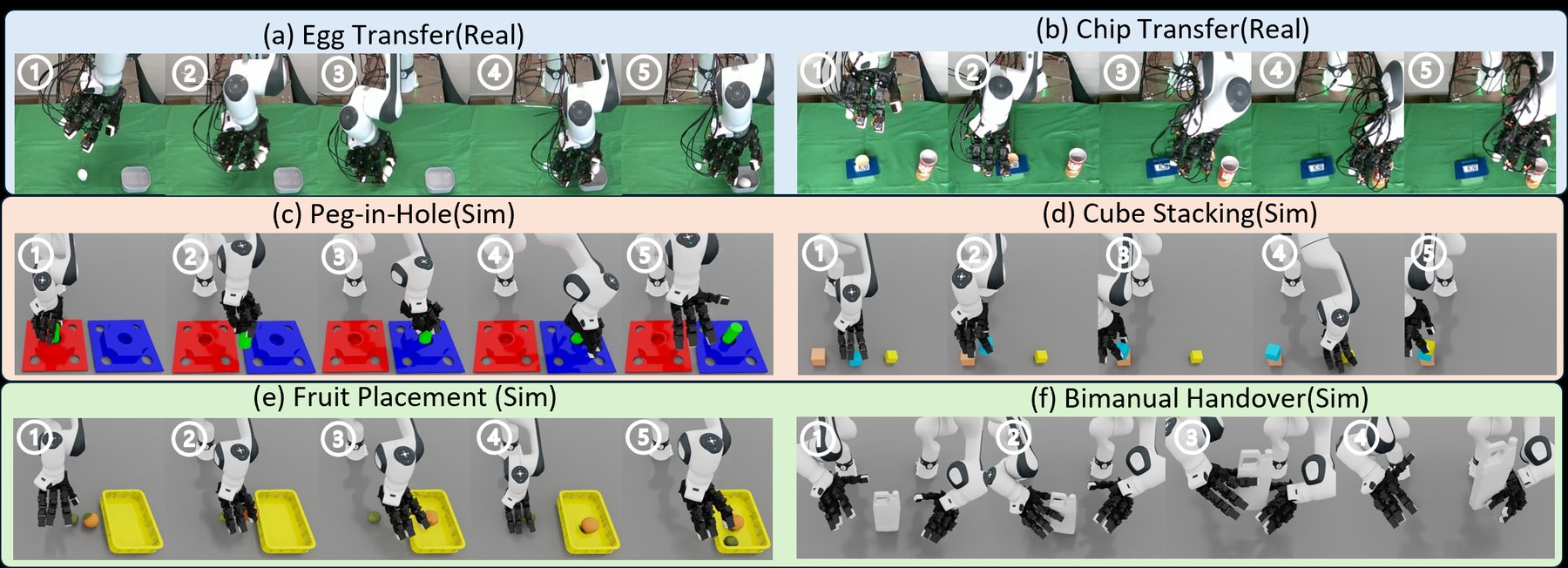
Nine volunteers (ages 22–31) did egg transfer and chip transfer on the real robot, plus peg-in-hole, cube stacking, fruit pick-and-place, and a bimanual bottle handover in Isaac Sim. Each task: five trials with haptics, five without, randomized.
Haptics raised success on all six tasks, +2.2 to +15.6 percentage points. The biggest jumps were sim handover (+15.6) and real egg transfer (+13.3). Times got faster on egg and peg-in-hole and slower on the multi-stage tasks. Contact-clarity and grasp-confidence Likert scores improved in both sim and real (Wilcoxon, p < 0.05). Ease did not move much on the real robot.
Downstream, about 50 demos trained an extended 3D-ViTac policy. Visual-tactile beat vision-only on peg-in-hole (10% → 27%, +17 points) and stacking (27% → 36%). Fruit placement did not.
Code is promised open: github.com/idombanker/ViHaTeleop. Sample is nine people. No outside tracker ground truth.
A Human’s Take
A price and a weight I can argue about over coffee. That is the right shape. The study is small, and the buzz is PWM on three rings, not a force-feedback glove. Still: if you are collecting contact data and you do not have a SenseGlove budget, this is the first $550 kit I have seen that bothered to measure whether the buzz did anything.