Wireless 5G Workcells Cut the Cabling Tax on Human–Robot Cells
High-mix remanufacturing cells get rearranged constantly. Fixed power and data cabling make every layout change a facilities project, not a software deploy. Commercial wireless gear that is both real-time safe and perception-ready is still thin on the shelf.
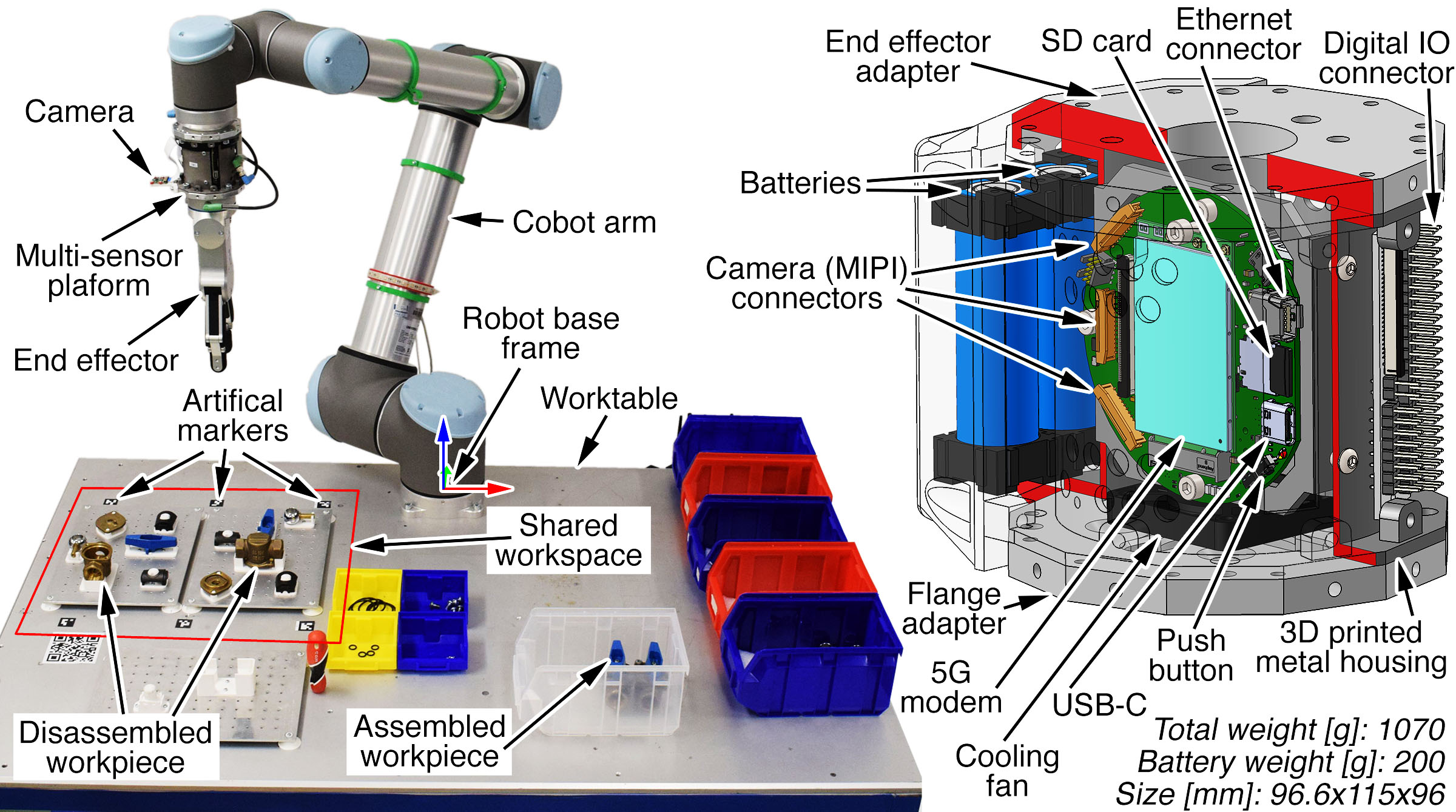
A team including researchers at HUN-REN SZTAKI and partners posts “Removing Infrastructure Barriers in Human-Robot Collaboration Through Wireless Reconfigurable Cells” to arXiv on Aug 10, 2026 (arXiv:2608.09658), accepted at IROS 2026. The pitch is a portable, 5G-based experimental workcell for remanufacturing, training, and HRC studies — without dragging Ethernet and power everywhere.
What is in the cell
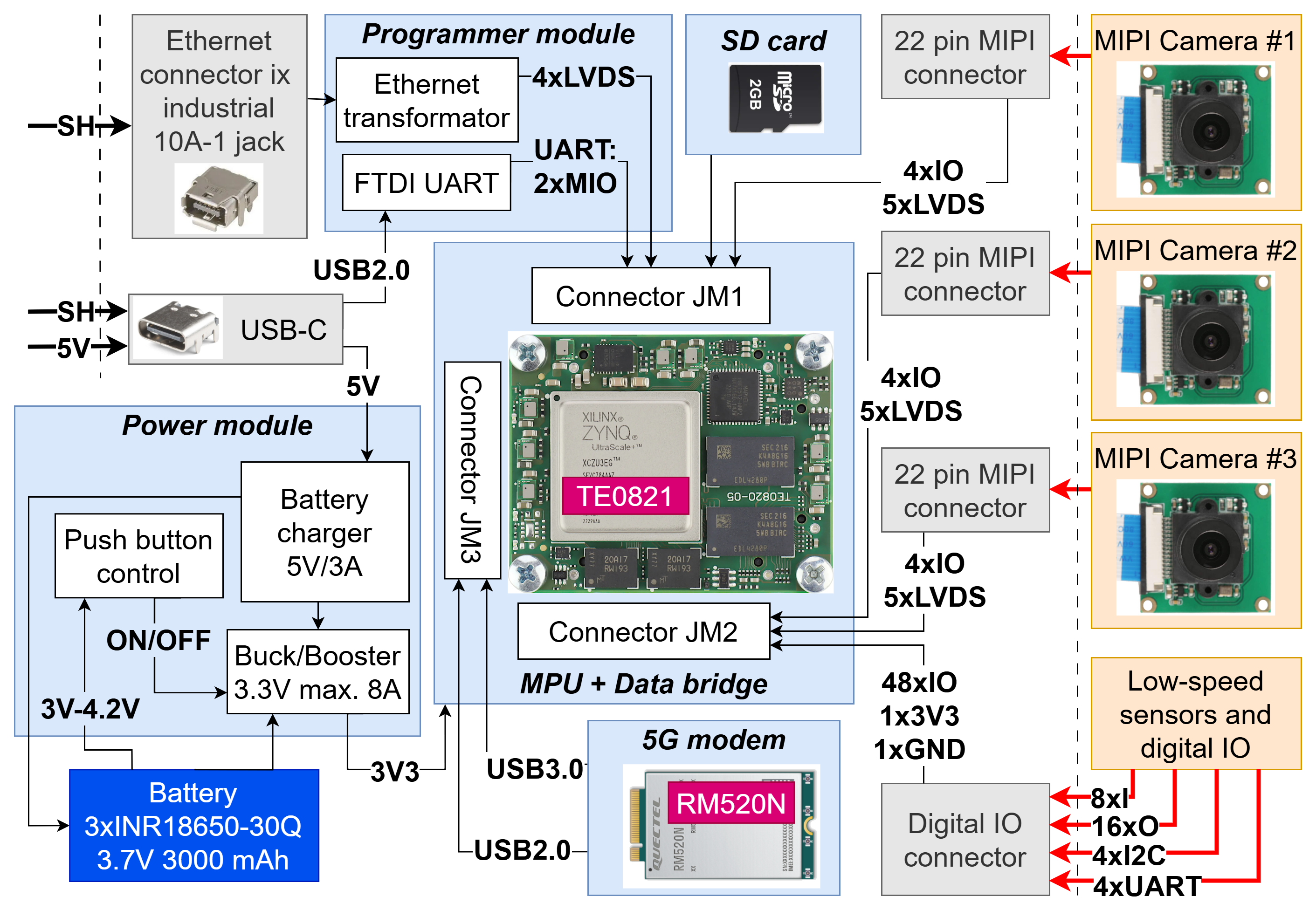
The paper’s hardware contribution is a battery-powered multi-sensor platform: Ethernet and USB-C interfaces, a Xilinx UltraScale+ TE0821 module as MPU and data bridge, a Quectel RM520N 5G modem, triple MIPI cameras, and low-speed digital I/O. Perception runs computer vision for object detection, pose estimation, and hand recognition so operators can share space with the robot as the layout changes.
Trained on synthetic and real data, the vision stack reports mAP@50-95 of 97.74 ± 0.10% and mean inference 12.5 ms. Heavy inference is offloaded to the edge over 5G so the mobile sensor pack stays light.
Networks in two countries
To argue portability, the authors deployed the architecture in Hungary and Norway across public and private, Standalone and Non-Standalone 5G. Network experiments show round-trip response times down to 12 ms on compatible network–device pairings — in the band they call suitable for adaptive HRC. They also flag interoperability limits in current 5G deployments that still need engineering work.
A supplementary video of the workcell is linked from the arXiv abstract (YouTube).
A Human’s Take
If your cell moves every week, copper is a tax. Twelve-millisecond RTT and nearly 98% hand mAP are the numbers that make this more than a 5G brochure: they are in the same conversation as safety-grade co-location, not just telemetry. The honesty about interoperability across SA/NSA and public/private nets is what I will remember. The next proof I want is a plant-floor week of layout changes with a published incident log, not another lab dual-country demo.