Xiaoyuan Is a Guide Dog With Wheels for Flats and Legs for Stairs
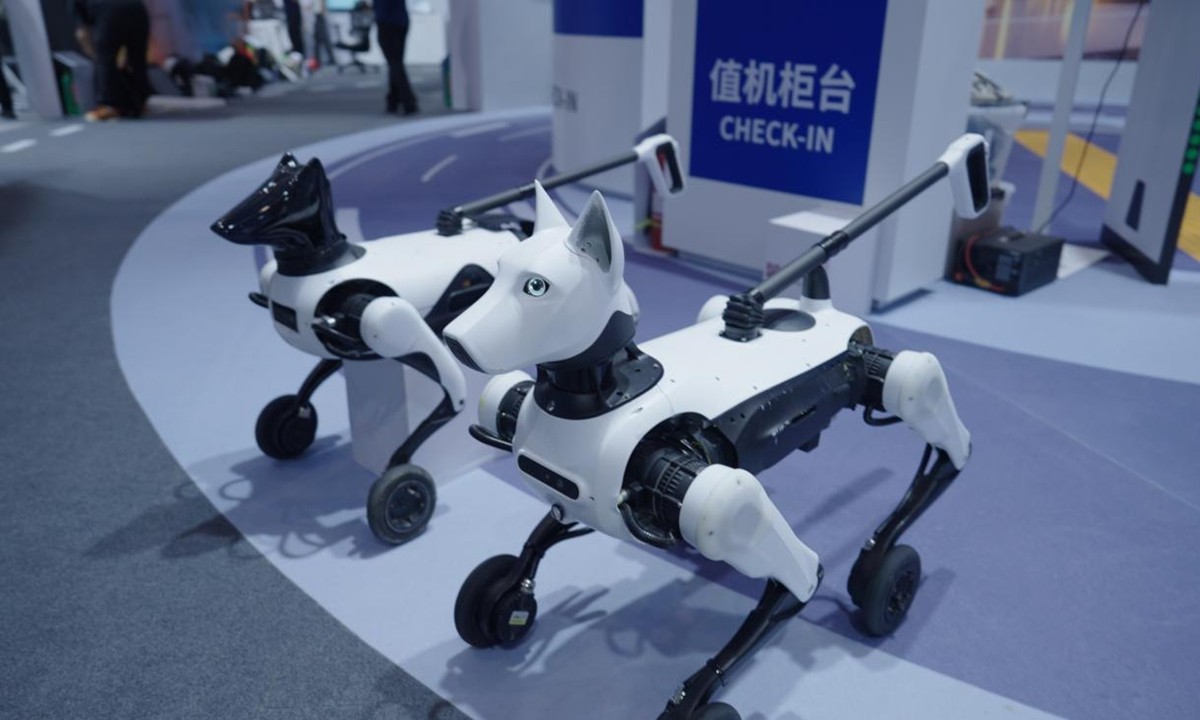
A white quadruped with a leash handle and wheels on its feet showed up at the China Care and Rehabilitation Expo in Beijing last Friday. Its name is Xiaoyuan. South China Morning Post, citing Hangzhou’s Zhiyuan Research Institute (affiliated with China North Industries Group), calls it the world’s first wheeled-and-legged robot guide dog. Global Times, writing a day later, attributes the same machine to Yuanshan Zhixing Technology. The photos match. The corporate name does not, and neither outlet explains the split.
The pitch is simple. Roll on wheels when the floor is flat and quiet. Switch to legs when the path turns into stairs. Stay quiet enough that a user who navigates by sound can still hear the street.
What the institutes claim
Both SCMP and Global Times repeat the same performance numbers from the developers:
- Indoor obstacle-avoidance success of at least 99%, outdoor at least 96%
- Outdoor positioning error held within 30 cm
- Detection of overhead hazards such as low branches and scaffolding, with a slow-down or detour
- Route navigation, voice interaction, companionship, and reminders
- A remote volunteer alert when the user asks for help
SCMP adds that Xiaoyuan plugs into disability-federation systems, an accessibility map, and that volunteer portal. Global Times says the walking rhythm and leash control are meant to match a real guide dog, and that China has more than 17 million people with visual impairments against about 400 living guide dogs.
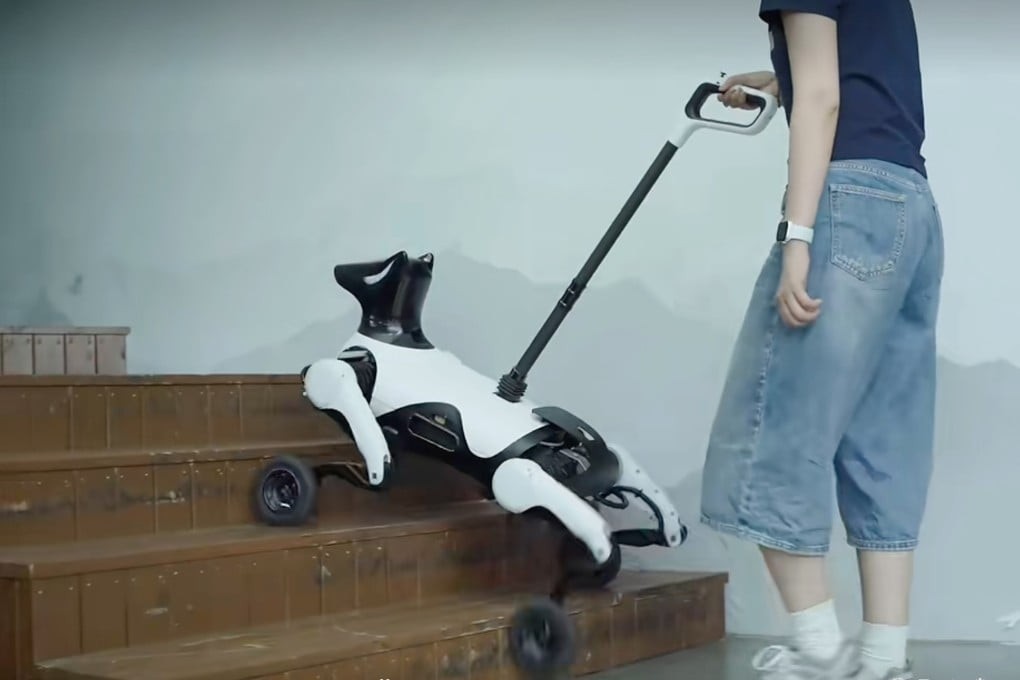
Hangzhou’s Xihu district has already opened city roads, commercial areas, and parks for field tests, Global Times reports, with extra experiments in subway stations and shopping malls. The product is in cooperation with disabled persons’ federations in several regions, according to the company talking to GT.
No price, no battery figure, and no independent test of those 99/96 percent rates appear in either story.
A Human’s Take
Wheels for the quiet parts and legs for the stairs is the kind of hybrid I want on a sidewalk, not another humanoid waving at a booth. I am not going to treat a press-kit obstacle-avoidance percentage as a white-cane replacement. What I want next is a timed Xihu run: a real station, a real staircase, and a user who did not design the robot.