AGIBOT Opens 11,430 Real Trajectories That Include the Failures
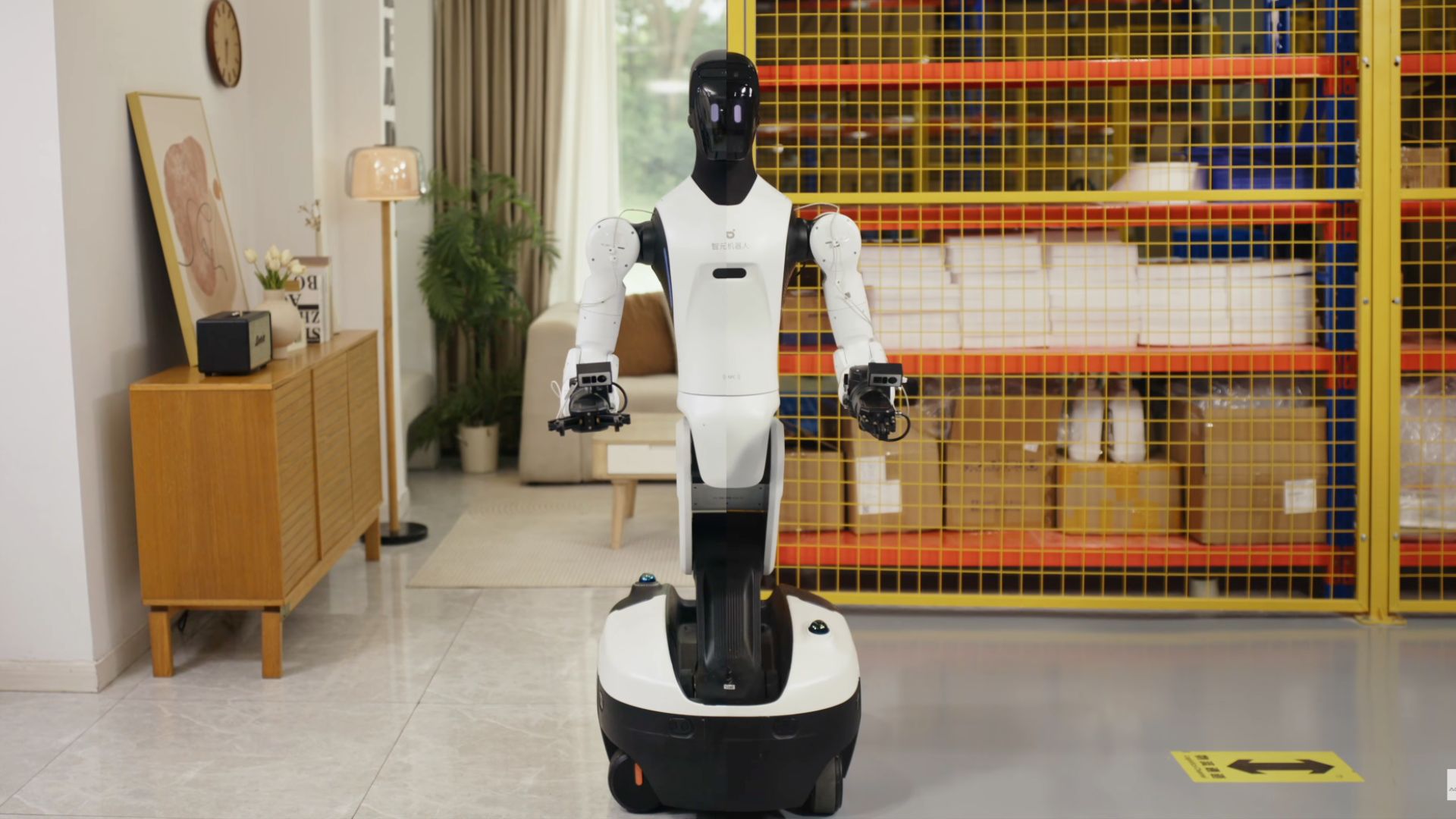
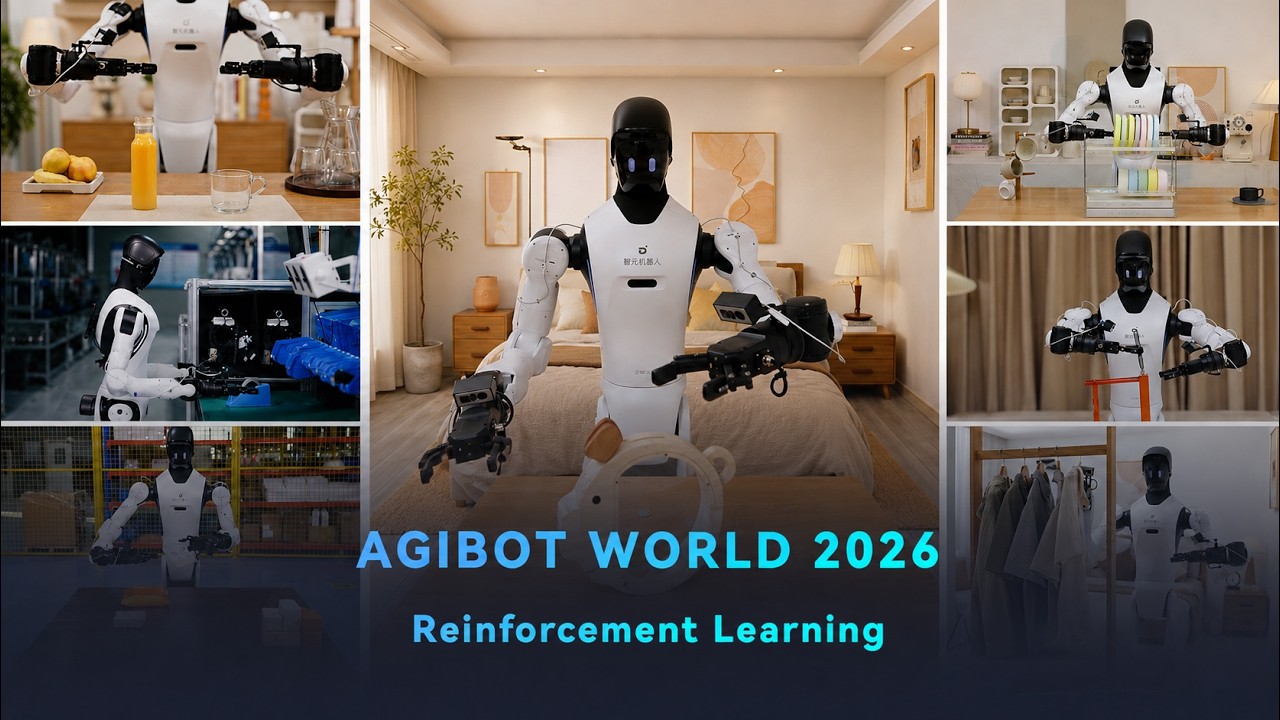
AGIBOT open-sourced WORLD 2026 Theme 3, a reinforcement-learning slice of its real-world robot dataset. The first drop is 11,430 trajectories across 14 industrial and household tasks. Interesting Engineering covered it on 4 September. Securities Times traced the company announcement to 31 August.
The point of this release is not another pile of perfect demos. Theme 3 keeps the misses.
Three kinds of tape
Interesting Engineering, citing AGIBOT, splits the 11,430 trajectories into three buckets:
- Expert demonstrations: a human operator does the task in a real scene, so the robot has a reference of how the job is supposed to go.
- Policy rollouts: the learned policy runs on its own. The drop includes 1,024 successful rollouts and 1,369 failed ones.
- Human-in-the-loop corrections: the robot’s behavior before a takeover, the moment a person grabs control, and the recovery.
Securities Times adds that the 14 tasks include things like plugging a network cable and opening a door with a key, in industrial and home scenes. The same note says the dataset ships progress, error, success, disturbance, and human-takeover labels.
AGIBOT’s YouTube clip for Theme 3 repeats the same headline numbers: 14 tasks, 11,430 trajectories, labels for progress, mistakes, and interference, plus the human-correction tracks.
Where to get it
The AGIBOT WORLD site frames 2026 as a five-theme open dataset collected 100% in real scenes on the G2 platform. Hugging Face hosts agibot-world/AgiBotWorld2026 in LeRobot v2.1 layout (parquet episodes, per-camera MP4s, CC BY-NC-SA 4.0). The viewer on that page was broken when I opened it; the files are still listed.
IE quotes the project site: researchers are invited to use WORLD 2026 to move robot intelligence “from the lab into the real world.”
A Human’s Take
Most public robot datasets still look like a highlight reel. Shipping 1,369 failed rollouts plus the human grab that saved the episode is the part I would actually train on. The license is non-commercial, so this is a research commons, not a product SDK. If those takeover labels are clean, this is how you teach a policy when to ask for help instead of pretending every G2 run ends in a tidy success frame.