Walden Robotics Leaves Stealth With $300M and a Toyota Plant Job
Walden Robotics, a Cambridge, Massachusetts full-stack Physical AI company spun out of Toyota Research Institute, came out of stealth on July 15 with $300 million in funding at a $1.1 billion valuation. The round was co-led by Toyota (Toyota Motor Corp, Toyota Invention Partners, and Toyota Ventures) and Deviation Capital, with participation from NVIDIA, Boeing, Samsung Ventures, CoreWeave Ventures, Prologis Ventures, and others.
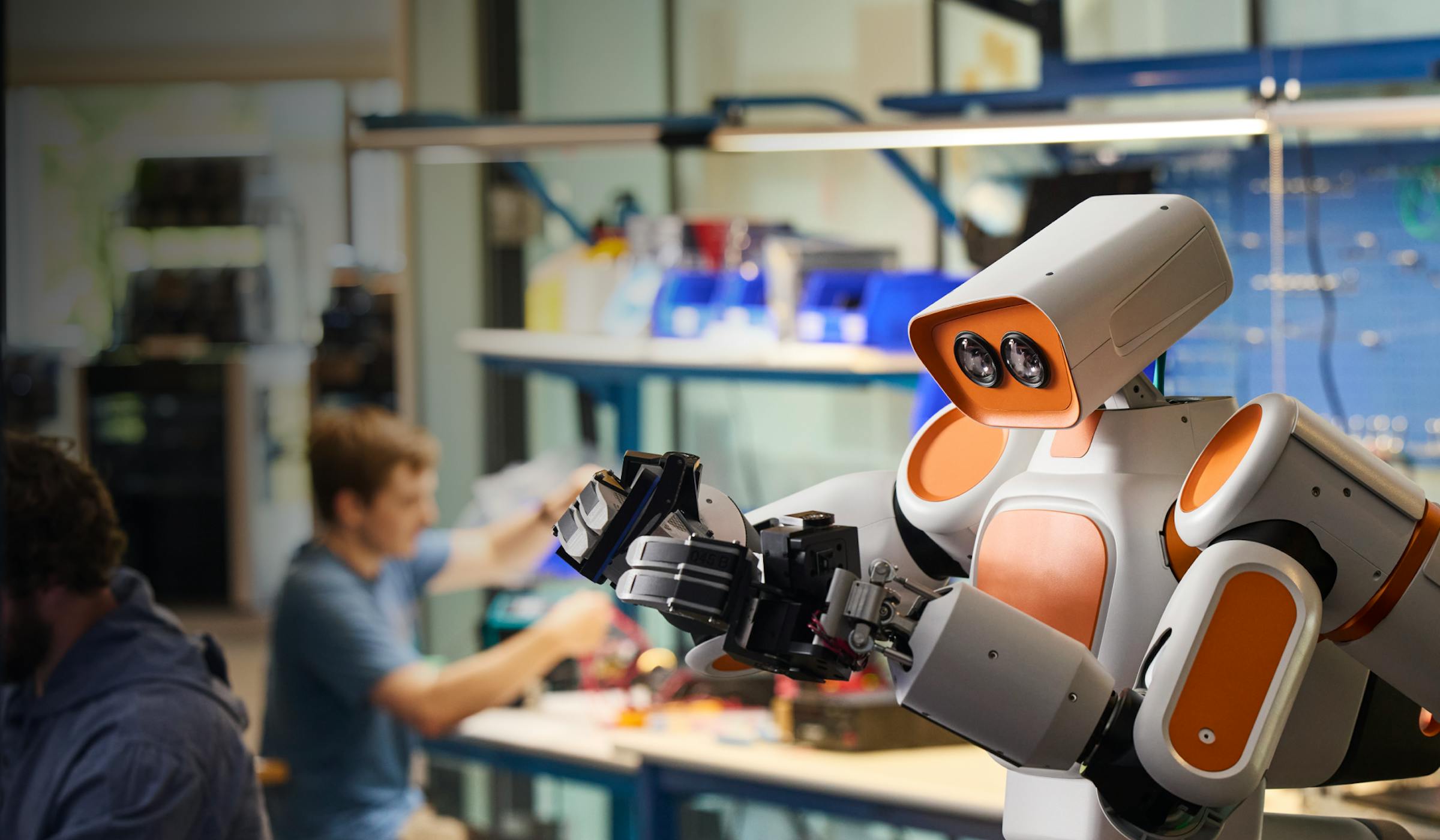
Walden Robotics @WaldenRobotics just raised $300M at a $1.1B valuation — TRI spinout, wheeled semi-humanoid, Toyota plant deployment since February. Demo clip of pick-and-place in the post.
— Léo (@LeoKharon) July 26, 2026
Who’s Behind It
CEO Dr. Russ Tedrake is a co-founder, MIT professor, and former Senior Vice President of Large Behavior Models at Toyota Research Institute. Walden’s release says the team draws from TRI, MIT, Stanford, and Amazon robotics talent. Boston Globe coverage names hardware, software, and product leaders with Amazon Robotics, Berkshire Grey/Kiva, Draper, and Dexai backgrounds — not a pure academic lab roster.
Tedrake told the Globe the training barrier has dropped: show demonstrations and the robot can learn a new task without writing new code for every skill. The company brands its stack Large Behavior Models (LBMs), building on earlier work including Diffusion Policy.
What’s Actually Deployed
According to Walden’s launch post:
- Spun out of TRI in January 2026
- Robots doing useful production work at a Toyota plant in North America since February — pilot to production work in under two months (company timeline)
- Focus industries: automotive, aerospace, semiconductors, electronics, logistics, life sciences
Form factor: humanoid upper body on wheels (or a fixed base), not bipedal legs. Tedrake told the Boston Globe that safety standards for wheeled machines are more mature than for legged robots, and wheels are simpler and can carry larger batteries — a practical factory argument, not a meme about “real humanoids have legs.”
Commercial model, per Tedrake in the Globe interview: robots as a service for now, because hardware is still changing fast.
Toyota EVP/CTO Hiroki Nakajima is quoted in Walden’s release backing the partnership and framing value from day one in real work environments, with continuous learning and people at the center.
A Human’s Take
I like the form-factor honesty. If your customer is a car plant, wheels plus standards maturity beat a backflip every time. The uncomfortable question is governance: Toyota is co-lead investor, strategic partner, and first named deployment customer. That can be a feature (pull-through demand) or a soft landing for a lab spinout. Both can be true until a second and third customer show up with their own budgets.
What I want next is boring: hours per shift without a human “pilot,” failure modes in writing, and a price per hour of useful work. $1.1B on a seed-stage reveal is a lot of faith. The Toyota floor since February is the only claim that keeps me reading past the logo wall.